Finsamudra Newsroom, home

Finsamudra Desk

SBI Plans 11,000–12,000 Hires and 200–250 New Branches, Prepares to Sell Up to 1% of NSE in Its IPO

While fintechs celebrate branchless banking, India's largest lender is expanding its physical territory. In the battle for low-cost retail deposits, brick-and-mortar remains the ultimate moat.

12,000 HIRINGSBI FY27 PLAN
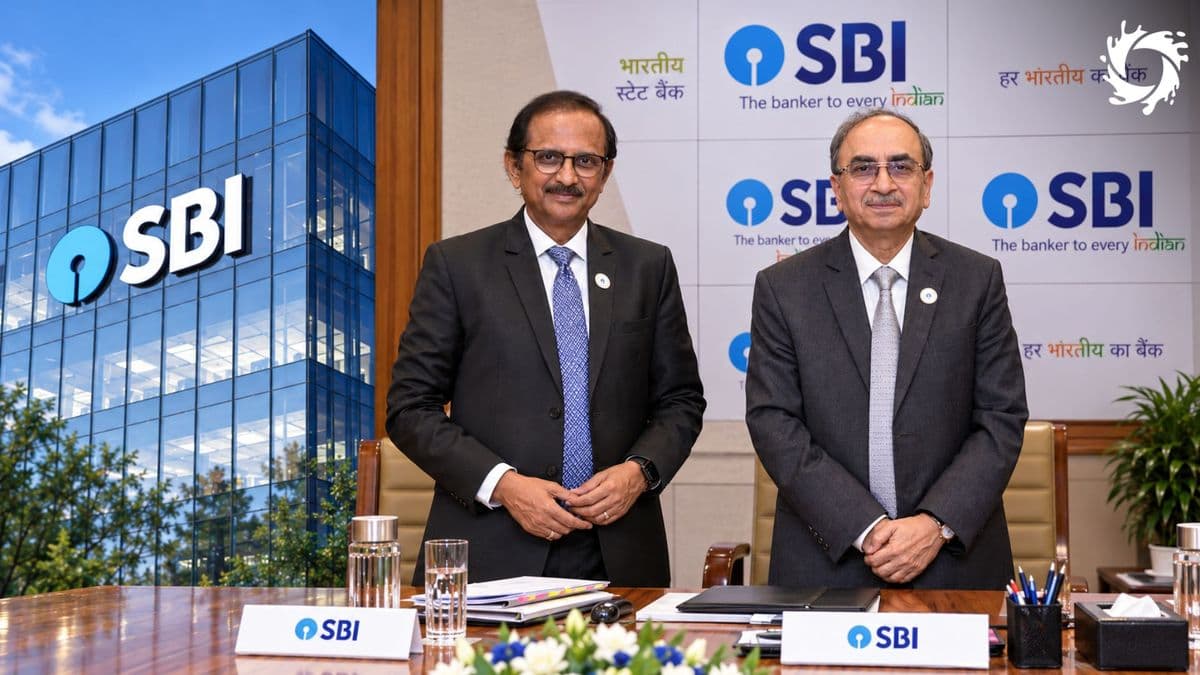
HERO IMAGE
Image: - FINSAMUDRA

Introduction: The Contrarian Play in Indian Banking

For the past decade, financial technology presentations have repeated a familiar prophecy: that the bank branch was on a glide path to extinction. The rise of Unified Payments Interface (UPI), digital onboarding rails, and mobile neo-banking was supposed to render brick-and-mortar real estate obsolete.

State Bank of India (SBI), which anchors nearly a quarter of the nation's banking system, is proving that reality is far more nuanced.

In a comprehensive operational update, SBI Chairman C.S. Setty confirmed that the country’s largest commercial lender plans to recruit 11,000 to 12,000 personnel and expand its network by 200 to 250 net new branches during the ongoing financial year. Concurrently, the banking behemoth is preparing to unlock non-dilutive capital by divesting up to a 1% stake in the National Stock Exchange’s (NSE) upcoming ₹30,000-crore initial public offering.

At a time when global banks are trimming physical footprints to cut overheads, SBI’s simultaneous expansion of human capital and physical real estate delivers a profound strategic thesis: in an emerging economy battling for low-cost retail deposits, branch density is not an operational liability—it is the ultimate competitive moat.


Section 1: The Physical Moat – Decoding the 250-Branch Expansion

The defining structural challenge facing Indian commercial banks in 2026 is not credit demand; it is deposit mobilization. With credit growth consistently outpacing deposit growth across the sector, the race to secure low-cost Current Account and Savings Account (CASA) balances has reached peak intensity.

Digital channels excel at acquiring high-velocity transactional accounts. However, they consistently underperform when it comes to capturing deep, sticky, multi-generational household savings and commercial treasury floats.
Where Is SBI Finding Branch "White Space"?

Despite maintaining a network of over 22,500 branches across India, Chairman Setty emphasized that significant territorial white space remains:

  1. Peri-Urban Residential Corridors: As Tier-1 and Tier-2 metros expand outward, newly developed residential colonies and satellite townships lack proximate banking infrastructure. Opening a branch early captures first-mover household savings before competing private lenders enter.
  2. Emerging Industrial & Logistics Belts: Industrial corridors, freight hubs, and SME clusters emerging along dedicated expressway corridors require immediate on-ground cash management, working capital advisory, and trade finance counters.
  3. Branch Network Rationalization: The planned expansion is net of consolidation. SBI is systematically pruning overlapping branches in legacy city centers (often relics of the historic associate bank mergers) and redeploying licenses to rapidly growing economic catchments.

Section 2: Talent Rebalancing – From Tech Specialists to Frontline Bankers

SBI's hiring target of 11,000 to 12,000 personnel in FY27 represents a calculated stabilization following an extraordinary recruitment drive in FY26.

According to the bank's annual disclosures, SBI inducted 25,633 personnel in FY26—comprising 4,640 probationary officers, 19,340 junior associates, and 1,653 contractual specialists. Most critically, that cohort included 1,500 specialist IT officers specifically hired to re-architect YONO 2.0, migrate core databases, and harden cybersecurity architectures.

The Strategic Pivot

With the foundational technology infrastructure established, Chairman Setty noted that the bank no longer requires an outsized intake of IT specialists. Instead, recruitment is pivoting back to core commercial banking:

  • Frontline Relationship Officers: Mobilizing retail deposits, managing affluent wealth accounts, and selling third-party insurance and mutual fund products.
  • SME & Agriculture Credit Underwriters: Providing specialized on-the-ground field appraisal for agricultural credit, MSME working capital, and supply-chain finance.
  • Customer Success & Operations: Managing branch transaction loads while transitioning walk-in customers to self-service digital kiosks.

The lesson for modern enterprise banking is clear: technology upgrades do not eliminate the need for bankers; they elevate the frontline banker from a routine ledger clerk to a high-margin relationship manager.


Section 3: The Capital Flywheel – Monetizing Non-Core Assets via the NSE Mega-IPO

While expanding operational expenditure on branches and salaries, SBI is simultaneously fortifying its Tier-1 capital through the strategic monetization of non-core balance-sheet investments.

SBI and its merchant banking subsidiary, SBI Capital Markets Ltd, plan to dilute up to a 1% stake in the National Stock Exchange of India (NSE) through the exchange's long-awaited ₹30,000-crore IPO.

The NSE Divestment Mechanics

  • Current Holding: The SBI Group collectively holds a 7.56% stake in the NSE (SBI directly owns 3.23%, while SBI Capital Markets owns 4.33%).
  • Divestment Structure: SBI proposes to sell 0.65%, while SBI Capital Markets will divest 0.35%, combining for a 1.00% group dilution.
  • Historic Milestone: At a proposed issue size of ₹30,000 crore, the NSE listing will become the largest IPO in Indian capital market history, surpassing:
    • Hyundai Motor India (₹27,858 crore in 2024)
    • Life Insurance Corporation of India (₹20,557 crore in 2022)
    • Paytm / One97 Communications (₹18,300 crore in 2021)
    • Coal India (₹15,200 crore in 2010)
      Section 4: Strategic Implications for the Indian Financial Sector

    SBI’s coordinated expansion of branches, staff, and non-dilutive capital provides a strategic roadmap for the broader banking landscape:

    1. The Death of the "Digital-Only" Thesis in Emerging Markets

    While pure digital onboarding works effectively for unsecured personal loans and credit cards, commercial lending, mortgage underwriting, and high-value fixed deposits remain trust-intensive transactions. A customer placing a lifetime retirement corpus of ₹50 lakh demands a physical institution with an identifiable branch manager.

    2. Structural Advantage in Liquidity Coverage (LCR)

    As the Reserve Bank of India refines Liquidity Coverage Ratio (LCR) frameworks to account for run-off risks associated with instant digital banking, traditional branch-mobilized retail deposits enjoy lower regulatory run-off assumptions than wholesale or volatile fintech deposits. SBI’s branch network acts as a regulatory shock-absorber.

    3. Cross-Selling High-Margin Parabank Products

    A physical branch is no longer merely a cash deposit window; it is a financial supermarket. SBI's 250 new branches serve as direct distribution hubs for SBI Life, SBI General Insurance, and SBI Mutual Fund, creating an internal fee-generating flywheel that pure-play fintechs struggle to replicate.


    The Executive Checklist: Key Lessons for Financial Institutions

    For C-suite banking executives, treasury heads, and strategic planners, SBI’s playbook highlights three imperative priorities:


Why it matters

Conclusion: The Triumph of the Hybrid Banking Engine

The future of Indian banking is neither purely digital nor stubbornly physical. It belongs to the institutions that master the synthesis of both.

State Bank of India’s plan to deploy 12,000 new professionals, open 250 branches, and monetize its non-core equity in the landmark NSE IPO demonstrates institutional confidence at its highest level. By reinforcing its physical moat while running digital rails that process millions of transactions per second, SBI is demonstrating that in retail banking, scale is not just measured in software code—it is measured in physical presence, customer trust, and balance-sheet durability.


More on SBI

Every story on SBI →

Sources

Finsamudra Desk8 Sept 2026, 10:49 am IST
See all

Get the Morning Brief

India's lending news before your first call — subscribe free

The same daily intelligence 30,000+ CXOs, DSAs and finance professionals follow on LinkedIn, with the Finsamudra take.

The Morning Brief · Free

Get India's lending news before your first call

The daily intelligence 30,000+ finance professionals follow on LinkedIn, in one short email from the Finsamudra Desk.