FinsamudraNewsroom

Finsamudra Desk

RBI revokes NBFC licences for 135 entities over compliance failures

The Reserve Bank of India has cancelled registrations for 135 non-banking finance companies across India, citing regulatory violations and inactive operations. The majority of revoked entities were based in West Bengal.

135NBFC registrations revoked
The Reserve Bank of India (RBI) is sending a very clear, uncompromising message to the financial sector: comply with the rules, or lose your license immediately.
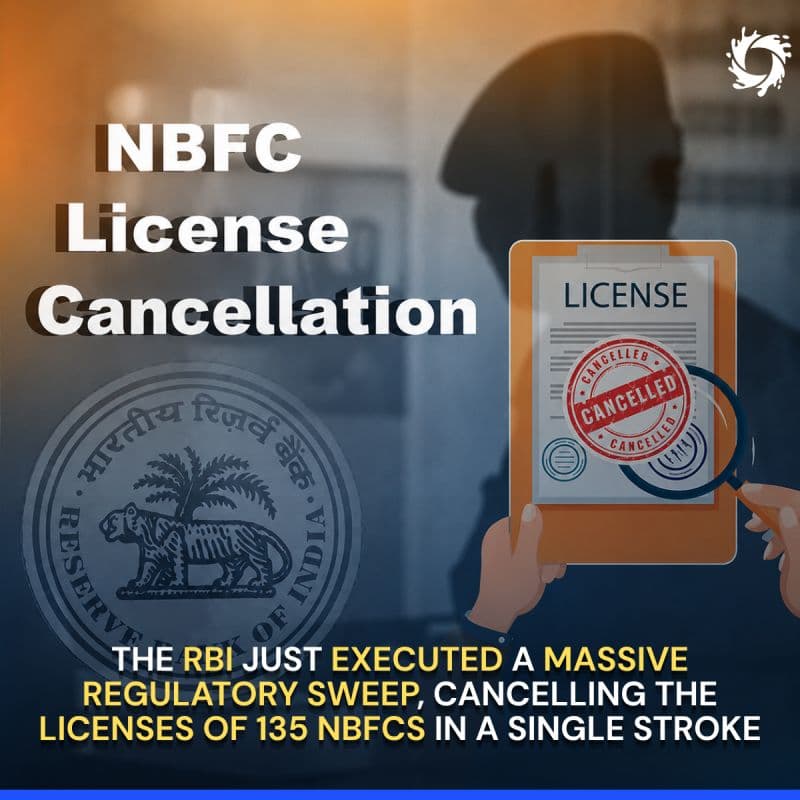
Image: Finsamudra LinkedIn archive

The RBI has officially revoked the Certificates of Registration for 135 Non-Banking Financial Companies (NBFCs) in a regulatory enforcement action targeting non-compliant operators. The move signals the central bank's zero-tolerance stance on entities that breach licensing conditions or abandon legitimate lending operations.

The revoked entities failed to meet strict regulatory guidelines, violated core licence conditions, or had ceased conducting bona fide lending business. A substantial majority of the cancelled NBFCs were concentrated in West Bengal, pointing to localized compliance gaps.

While the number appears significant, the RBI frames this action as a necessary cleansing of the sector. Entities holding licences purely on paper without maintaining operational standards have been removed from the register.

The cleanup protects borrowers from unregulated financial practices and ensures that compliant NBFCs operate on a level playing field. Legitimate lenders face reduced competitive pressure from shadow operators and shell entities that were circumventing regulatory oversight.

By weeding out inactive and non-compliant players, the RBI aims to strengthen the overall health and transparency of India's NBFC ecosystem. The action underscores that holding a licence requires sustained compliance, not merely nominal registration.

Why it matters

For DSAs and loan connectors, this enforcement wave reduces credit leakage through unregulated channels and clarifies the market: only compliant NBFCs will remain viable partners. Lenders sourcing through Main DSAs and Sub-DSAs benefit from reduced counterparty risk and regulatory tail risk in their partner networks.

For borrowers, the cleanup means fewer predatory unregistered lenders and greater assurance that their loans are routed through entities under active RBI supervision. For the broader lending ecosystem, it validates that scale and profitability in India's credit distribution network require genuine operational discipline, not regulatory evasion.

More on the RBI

Every story on the RBI →

Sources

Join the conversation on LinkedIn →
Finsamudra DeskNewsroom · 15 Jun 2026, 11:45 am IST
See all

Finsamudra Desk

The ₹52,878-Crore Defense: Inside DIPAM Secretary Arunish Chawla’s Comprehensive Rebuttal on the IDBI Bank Disinvestment

The proposed privatization of IDBI Bank Limited (NSE: IDBI • BSE: 500116) stands as the most consequential commercial banking transaction in modern Indian economic history. Marking the first strategic disinvestment of a public financial institution where the Government of India (GoI) and the Life Insurance Corporation of India (LIC) surrender management control, the transaction has inevitably attracted intense parliamentary and political scrutiny.

Economy4 min read

Get the Morning Brief

India's banking and finance news before your first call — subscribe free

The same daily intelligence 41,000+ CXOs, DSAs and finance professionals follow on LinkedIn, with the Finsamudra take.

The Morning Brief · Free

Get India's banking and finance news before your first call

The daily intelligence 41,000+ finance professionals follow on LinkedIn, in one short email from the Finsamudra Desk.