Finsamudra Newsroom, home

Finsamudra Desk

RBI penalizes Canara Bank for KYC delays and account misclassification lapses

The regulator flagged two operational deficiencies during a statutory inspection: failure to upload customer KYC records to the central registry on time, and improper classification of active accounts as inoperative.

➤The Reserve Bank of India (RBI) has penalized Canara Bank following its latest Statutory Inspection for Supervisory Evaluation. While the penalty amount is relatively small for a
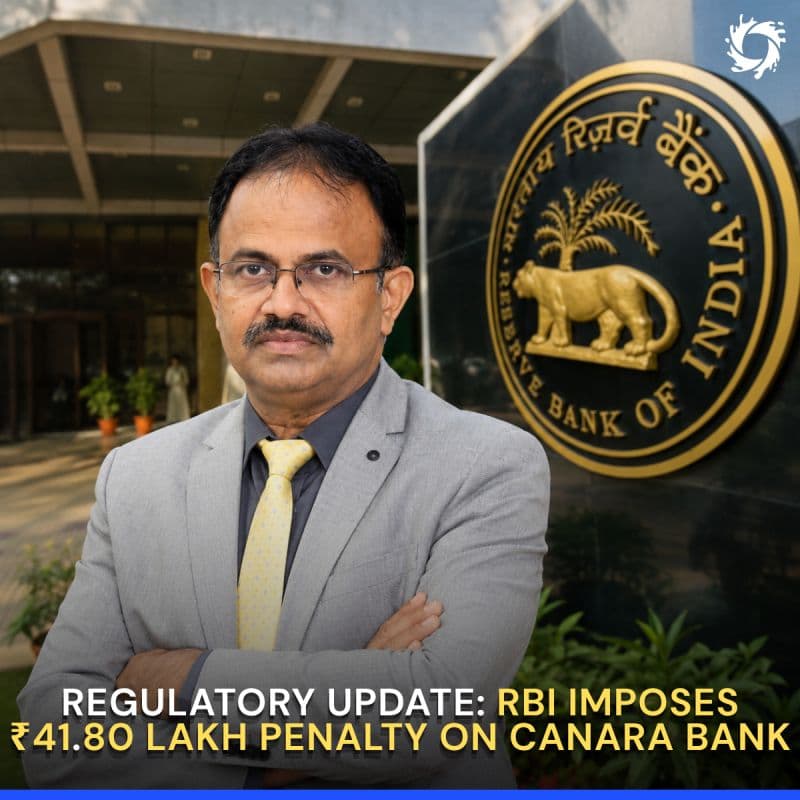
Image: Finsamudra LinkedIn archive

The Reserve Bank of India has issued a penalty against Canara Bank following its latest Statutory Inspection for Supervisory Evaluation. While the penalty amount is relatively small for a bank of Canara's size, the RBI's stated reasons highlight emerging regulatory priorities.

The two specific operational deficiencies cited were KYC delays and account misclassification. First, the bank failed to upload Know Your Customer records of certain customers to the Central KYC Records Registry within the mandated timeframe. Second, the bank improperly classified certain accounts as "inoperative" despite evidence that customers had conducted transactions in those accounts less than a year prior.

Canara Bank has stated the penalty will have no material impact on its financial or operational activities. However, the action signals a broader shift in RBI supervision: regulators are now applying stricter scrutiny to back-office operational compliance, particularly around KYC hygiene and the accuracy of customer account statuses.

For the banking sector, the message is clear. Robust internal audit and compliance engines are no longer optional enhancements—they are essential infrastructure to avoid regulatory friction and penalties.

Why it matters

For DSAs, loan agents, and credit connectors, this sets a critical operational standard. KYC accuracy and timeliness directly impact the speed and credibility of loan disbursement pipelines. If partner banks are delayed in uploading KYC records or misclassifying customer accounts, it creates downstream friction in loan origination and increases the risk of regulatory scrutiny cascading to the entire distribution network.

Banks and NBFCs must now treat compliance automation—especially around KYC uploads to CKYCR and account status governance—as a competitive necessity, not a compliance checkbox. Lenders with stronger back-office controls will face fewer regulatory delays and can maintain faster lending velocity. For DSAs and connectors, partnering with such banks becomes increasingly important to sustain deal flow and margins.

More on the RBI

Every story on the RBI →
Every RBI penalty on a lender this year →

Sources

Join the conversation on LinkedIn →
Finsamudra DeskNewsroom · 6 Jun 2026, 12:30 pm IST
See all

Get the Morning Brief

India's lending news before your first call — subscribe free

The same daily intelligence 30,000+ CXOs, DSAs and finance professionals follow on LinkedIn, with the Finsamudra take.

The Morning Brief · Free

Get India's lending news before your first call

The daily intelligence 30,000+ finance professionals follow on LinkedIn, in one short email from the Finsamudra Desk.