Finsamudra Newsroom, home

Finsamudra Desk

RBI cancels Sarvodaya Co-operative Bank licence over capital shortfall

The central bank has shut down the Mumbai-based lender, citing inadequate capital and regulatory non-compliance. Most depositors will be protected under DICGC insurance.

98.36%Depositors eligible for full DICGC cover
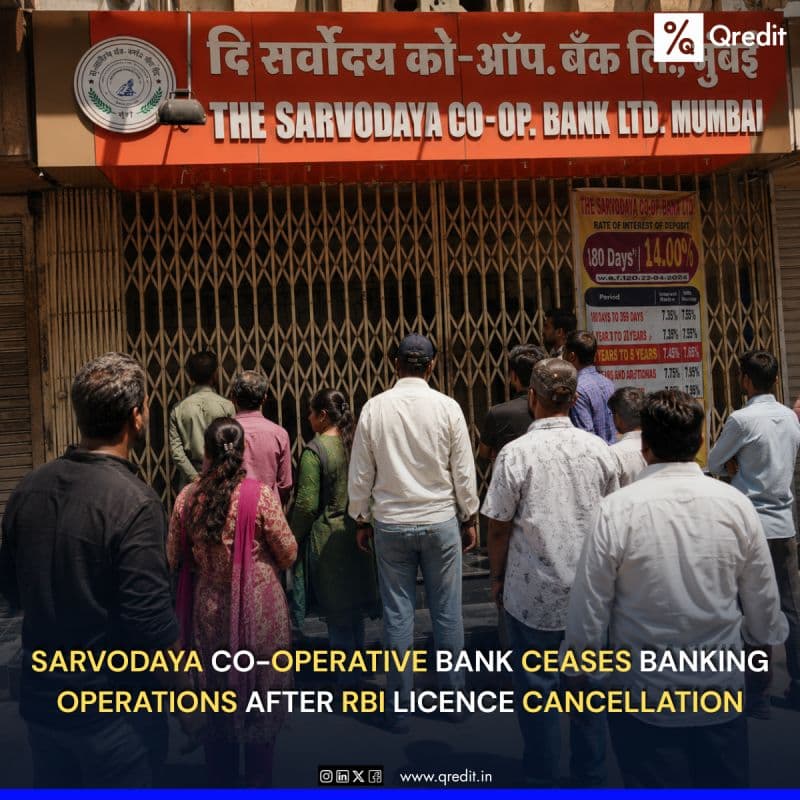
▸The Reserve Bank of India has cancelled the licence of Sarvodaya Co-operative Bank Ltd., Mumbai, effective from the close of business on May 12, 2026.
Image: Finsamudra LinkedIn archive
₹5 lakhDICGC insurance limit per account
₹26.72 croreDICGC payout as of March 31, 2026

The Reserve Bank of India has cancelled the banking licence of Sarvodaya Co-operative Bank Ltd., Mumbai, effective from the close of business on May 12, 2026. The lender is now prohibited from conducting any banking business, including accepting and repaying deposits.

The RBI's action stems from three core failures: inadequate capital, poor earning prospects, and non-compliance with provisions of the Banking Regulation Act. These breaches triggered the regulator's intervention under its supervisory mandate.

Depositor protection remains intact. The RBI estimates that 98.36% of depositors are eligible to receive the full amount of their deposits from the Deposit Insurance and Credit Guarantee Corporation (DICGC), subject to the standard insurance limit of ₹5 lakh per account.

As of March 31, 2026, the DICGC had already paid ₹26.72 crore towards insured deposits. The completion of claims under the ₹5 lakh cap is expected to proceed through standard DICGC channels.

Why it matters

For DSAs and lending professionals, this closure underscores the RBI's enforcement of capital adequacy norms across the cooperative banking sector. While Sarvodaya's failure does not directly affect loan distribution networks, it reinforces that lenders—whether banks or NBFCs—must maintain regulatory compliance or face suspension. Loan agents and DSAs partnering with cooperative banks should verify capital ratios and compliance posture as part of partner due diligence.

The event also highlights the DICGC's role as the backstop for depositors, reducing systemic panic risk. For lending businesses that depend on stable funding channels, the certainty of depositor protection means cooperative banks with weak capital will be identified and removed before contagion spreads, preserving the integrity of India's credit supply chain.

More on the RBI

Every story on the RBI →

Sources

Join the conversation on LinkedIn →
Finsamudra DeskNewsroom · 13 May 2026, 1:00 pm IST
See all

Get the Morning Brief

India's lending news before your first call — subscribe free

The same daily intelligence 30,000+ CXOs, DSAs and finance professionals follow on LinkedIn, with the Finsamudra take.

The Morning Brief · Free

Get India's lending news before your first call

The daily intelligence 30,000+ finance professionals follow on LinkedIn, in one short email from the Finsamudra Desk.