Finsamudra Newsroom, home

Finsamudra Desk

RBI cuts CRR from 4% to 3% in four phases through November 2025

A phased reduction will inject ₹2.5 lakh crore into the banking system, expanding lending capacity and supporting the central bank's 6.5% GDP growth target for FY26.

₹2.5 lakh croreLiquidity injection
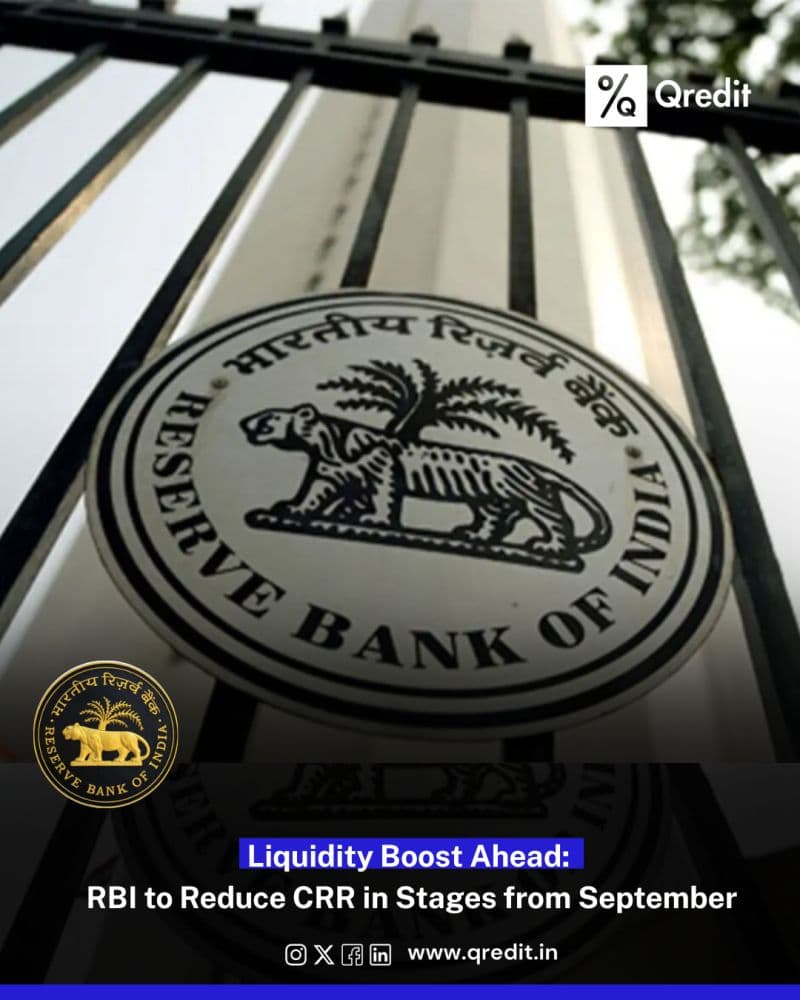
🚨 RBI’s Phased CRR Cut: 4% → 3% (Sept–Nov 2025)
Image: Finsamudra LinkedIn archive
4% → 3% (phased Sept–Nov 2025)CRR reduction
79% (room for expansion)Credit-deposit ratio

The Reserve Bank of India announced a four-step CRR (cash reserve ratio) cut starting September 6, 2025. Banks will see their reserve requirement fall from 4% to 3% across phases ending November 29. Each step—3.75%, 3.50%, 3.25%, and finally 3%—is spaced roughly four weeks apart.

This injection of ₹2.5 lakh crore gives banks substantially more dry powder for lending. With a credit-deposit ratio currently at 79%, lenders have meaningful room to expand advances to businesses and consumers. Lower reserve requirements translate directly into cheaper funds for banks to lend out.

The banking sector enters this easing from a position of strength. Capital adequacy stands at 17%, well above regulatory minimums. Net interest margins remain stable at 3.5% despite competitive pressure. Bank credit grew 12.1% in FY25, and the sector's liquidity ratio of 132% provides ample cushion for the transition.

Notably, the RBI kept its repo rate unchanged at 5.5%, allowing previous rate cuts to fully transmit through the economy before new liquidity support kicks in. Analysts describe this as calibrated easing—supporting growth without reigniting inflation. Bank stocks rallied immediately after the announcement, signalling market confidence in the credit expansion ahead.

Why it matters

For loan DSAs, connectors, and agents, this means dramatically improved sourcing conditions. As banks compete for market share with freshly available capital, they will likely relax pricing on retail and small-business credit. Loan approval timelines should compress. The 79% credit-deposit ratio leaves genuine room—lenders are not saturated and will actively hunt for good credits.

Lenders and NBFCs benefit from lower funding costs trickling down through the system. Banks with lower reserve requirements can price loans more competitively, but the expanded credit base also means more retail and SME borrowers moving from the unbanked to formal credit. For the lending ecosystem, this signals sustained origination momentum through at least Q3 FY26.

More on the RBI

Every story on the RBI →

Sources

Join the conversation on LinkedIn →
Finsamudra DeskNewsroom · 20 Aug 2025, 3:05 pm IST
See all

Get the Morning Brief

India's lending news before your first call — subscribe free

The same daily intelligence 30,000+ CXOs, DSAs and finance professionals follow on LinkedIn, with the Finsamudra take.

The Morning Brief · Free

Get India's lending news before your first call

The daily intelligence 30,000+ finance professionals follow on LinkedIn, in one short email from the Finsamudra Desk.