Finsamudra Newsroom, home

Finsamudra Desk

RBI caps bank and NBFC AIF investments at 10% per institution, 20% aggregate

New Alternative Investment Fund rules effective January 1, 2026 limit regulated entities' exposure to individual funds and require stricter provisioning when AIFs finance their own borrowers.

₹13.49 TrAIF commitments (FY25)
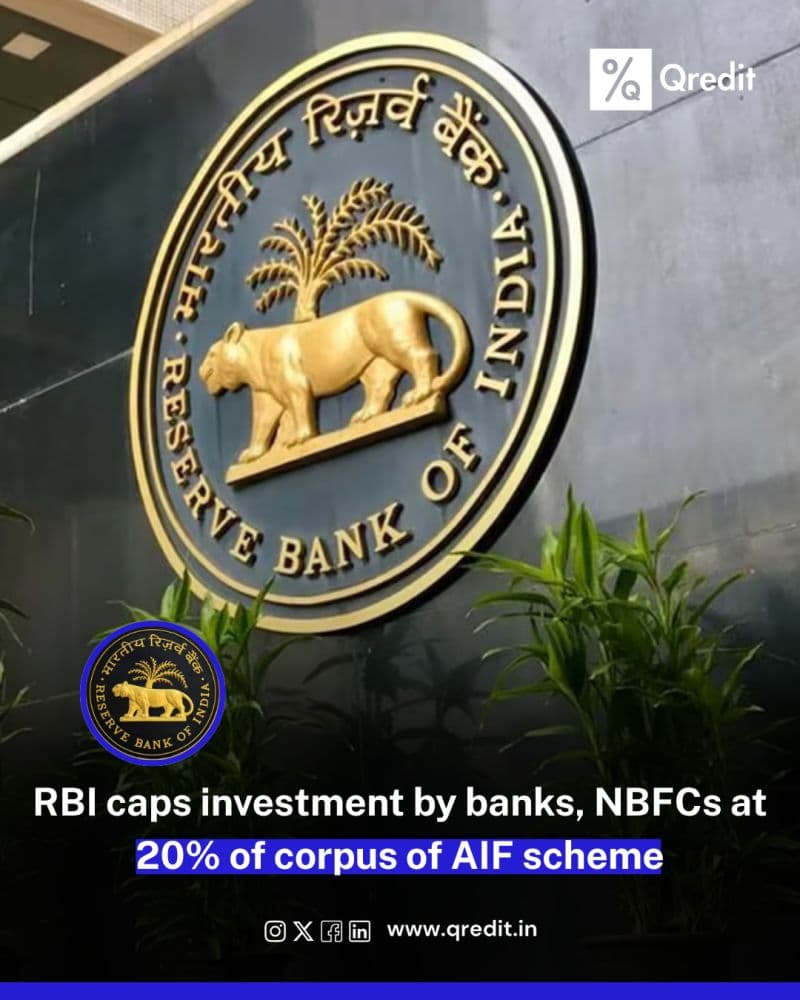
RBI Tightens Rules on AIF Investments by Banks & NBFCs!
Image: Finsamudra LinkedIn archive
₹5.38 TrTotal AIF investments (FY25)
10% of corpusPer-institution AIF investment cap

The Reserve Bank of India's Investment in AIF Directions, 2025 introduce hard caps on how much regulated entities can invest in any single Alternative Investment Fund. Banks, NBFCs, and all-India financial institutions are now limited to 10% of an AIF's total corpus per institution, with an aggregate ceiling of 20% across all regulated investors in the same fund.

The rules also tighten provisioning requirements. Any regulated entity investing more than 5% in an AIF that holds exposures to the entity's own borrowers must make 100% provisions for the proportionate investment, capped at its direct exposure. This applies only to non-equity exposures; downstream equity investments are exempt from the provisioning mandate.

The January 1, 2026 effective date allows a transition period. Investments already approved under the 2016 RBI guidelines remain unaffected, and the central bank may exempt certain AIFs after government consultation, though baseline compliance rules still apply.

The RBI framed these tighter restrictions to reduce concentration risk and prevent evergreening of stressed loans through backdoor AIF funding. The move balances industry feedback with regulatory objectives around transparency and risk containment.

Why it matters

For DSAs, loan connectors, and lenders in India's credit distribution network, these caps reshape how regulated entities can use AIFs as portfolio or risk-transfer vehicles. Banks and NBFCs can no longer cluster large exposures into a single fund, forcing more disciplined capital allocation and reducing systemic risk tied to AIF performance.

With AIF commitments at ₹13.49 trillion and investments totaling ₹5.38 trillion in FY25, regulated entities remain dominant players in the space. The 20% aggregate cap directly affects the availability of capital flowing through AIFs to support lending operations, making it critical for lenders to understand revised investment strategy and borrower access implications.

More on the RBI

Every story on the RBI →

Sources

Join the conversation on LinkedIn →
Finsamudra DeskNewsroom · 30 Jul 2025, 1:18 pm IST
See all

Get the Morning Brief

India's lending news before your first call — subscribe free

The same daily intelligence 30,000+ CXOs, DSAs and finance professionals follow on LinkedIn, with the Finsamudra take.

The Morning Brief · Free

Get India's lending news before your first call

The daily intelligence 30,000+ finance professionals follow on LinkedIn, in one short email from the Finsamudra Desk.