Finsamudra Newsroom, home

Finsamudra Desk

RBI Governor Rules Out Banking Licences for Corporate Conglomerates

Sanjay Malhotra has firmly closed the door on proposals to allow industrial houses or their NBFCs to hold banking licences, citing conflict-of-interest risks to depositor safety.

No Way for Corporate Bigwigs: RBI Rules Out Banking Licences for Conglomerates!
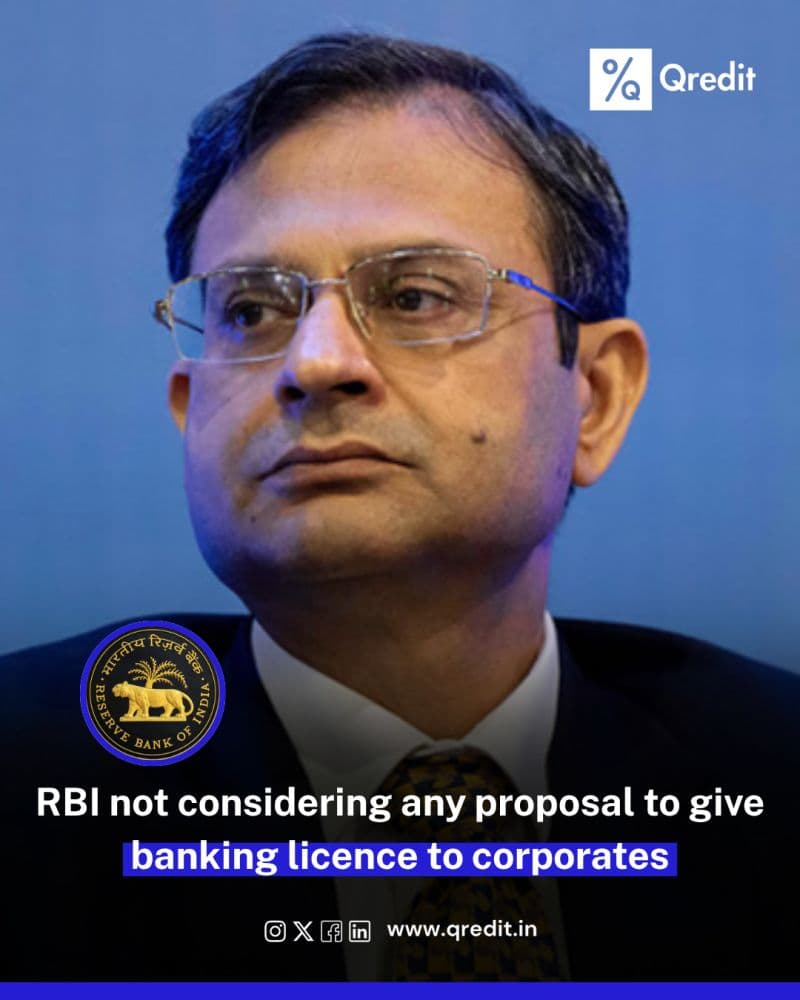
Image: Finsamudra LinkedIn archive

Reserve Bank of India Governor Sanjay Malhotra has definitively rejected any proposal to grant banking licences to corporate entities, either directly or through NBFC subsidiaries. The move underscores the RBI's stance that allowing industrial conglomerates to operate both business divisions and deposit-taking institutions creates an unacceptable conflict of interest.

Malhotra's position reflects the central bank's long-standing concern that dual operations—managing real-world industrial assets alongside depositor funds—introduces systemic risk. The RBI views such a structure as fundamentally compromising the safety and integrity of the banking system.

On ownership concentration, the RBI has reaffirmed that the 26% promoter voting rights cap in private sector banks will remain in place. There is no plan to review or relax this cap, signalling the RBI's commitment to wide-based ownership and protection against undue corporate influence in the banking sector.

The Governor further clarified that ultimate responsibility for safeguarding depositor trust rests with a bank's board. However, he noted that minor infractions will not necessarily implicate the entire board, allowing for proportionate governance oversight.

On monetary policy, Malhotra confirmed the RBI's neutral stance continues. Interest rate decisions over the next 6–12 months will be guided by inflation and growth outlook, rather than any pre-set bias.

Why it matters

For DSAs, loan agents, and credit distribution partners, this ruling maintains a clear operating boundary: banking licences remain a regulated utility controlled by deposit-taking institutions, not industrial conglomerates. This protects the banking channel from corporate conflict and ensures NBFCs—whether NBFC-MFI, NBFC-ND, or NBFC-D—remain the primary vehicle for non-bank lending expansion. Connectors can be confident that deposit-taking rules will not blur with industrial leverage.

For small and mid-market borrowers, this governance stance reinforces depositor protection and systemic stability. By keeping conglomerate ownership capped and conflict-of-interest risks out of banking, the RBI ensures capital allocation decisions prioritize credit discipline over corporate group leverage, ultimately strengthening the health of the lending ecosystem.

More on the RBI

Every story on the RBI →

Sources

Join the conversation on LinkedIn →
Finsamudra DeskNewsroom · 29 Jul 2025, 1:34 pm IST
See all

Get the Morning Brief

India's lending news before your first call — subscribe free

The same daily intelligence 30,000+ CXOs, DSAs and finance professionals follow on LinkedIn, with the Finsamudra take.

The Morning Brief · Free

Get India's lending news before your first call

The daily intelligence 30,000+ finance professionals follow on LinkedIn, in one short email from the Finsamudra Desk.