Finsamudra Newsroom, home

Finsamudra Desk

RBI tightens collateral recovery rules to plug moral hazard in bad-loan resolution

New draft rules bar banks and NBFCs from selling seized immovable assets back to borrowers or related parties, and require disposal within seven years. The move targets opacity in how lenders recover on defaulted loans.

Seven yearsMandatory disposal window for immovable assets
“Lower NPAs mean little if recoveries are opaque.”
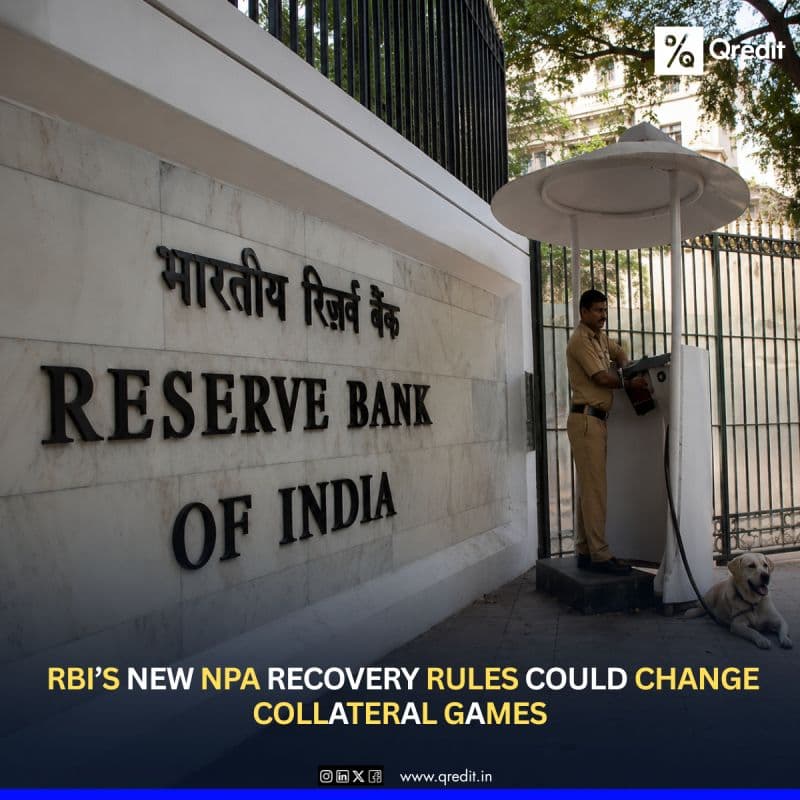
Image: Finsamudra LinkedIn archive

The RBI has proposed a framework governing how banks and NBFCs can acquire and dispose of immovable assets during loan recovery. The rules are designed to address a persistent problem: when collateral enters the recovery process, it often becomes a negotiation between lender and borrower on valuation, pricing, and buyer identity.

Under the new rules, banks and NBFCs may acquire immovable collateral only in exceptional recovery cases—not as routine practice. Once acquired, assets must generally be disposed of within seven years, creating a clear timeline for exit.

A critical restriction bars sale of recovered assets back to the original borrower or related parties. This measure directly reduces moral hazard: borrowers cannot quietly reclaim collateral at favourable terms, nor can related entities act as conduits to return assets to the borrower ecosystem.

India's NPA ratio has improved in recent years, but the RBI's focus on recovery quality signals a different concern. Lower NPAs alone do not guarantee a clean banking system if recoveries remain opaque or conducted without arm's-length discipline.

The framework is technical on its surface—asset disposal timelines, acquisition criteria—but addresses fundamental governance. It forces transparency into a process historically prone to negotiated settlements and informal arrangements.

Why it matters

For DSAs, loan agents, and connectors, this matters because cleaner recovery standards reduce credit-risk friction downstream. A borrower with a history of secured lending where collateral was genuinely at risk is a lower-risk originator. Conversely, if recoveries are soft—assets quietly returned or undervalued—the entire credit chain becomes less reliable. RBI's rules make that risk visible.

For lenders and NBFCs, tighter collateral recovery rules raise operational costs and timelines, but improve credit pricing accuracy. A seven-year disposal window and ban on related-party sales force genuine liquidation, making recoveries more predictable and less dependent on borrower negotiation. This standardization supports better risk measurement across the lending ecosystem.

More on the RBI

Every story on the RBI →

Sources

Join the conversation on LinkedIn →
Finsamudra DeskNewsroom · 6 May 2026, 5:45 pm IST
See all

Get the Morning Brief

India's lending news before your first call — subscribe free

The same daily intelligence 30,000+ CXOs, DSAs and finance professionals follow on LinkedIn, with the Finsamudra take.

The Morning Brief · Free

Get India's lending news before your first call

The daily intelligence 30,000+ finance professionals follow on LinkedIn, in one short email from the Finsamudra Desk.