Finsamudra Newsroom, home

Finsamudra Desk

PSU banks double green deposits in one year under RBI framework

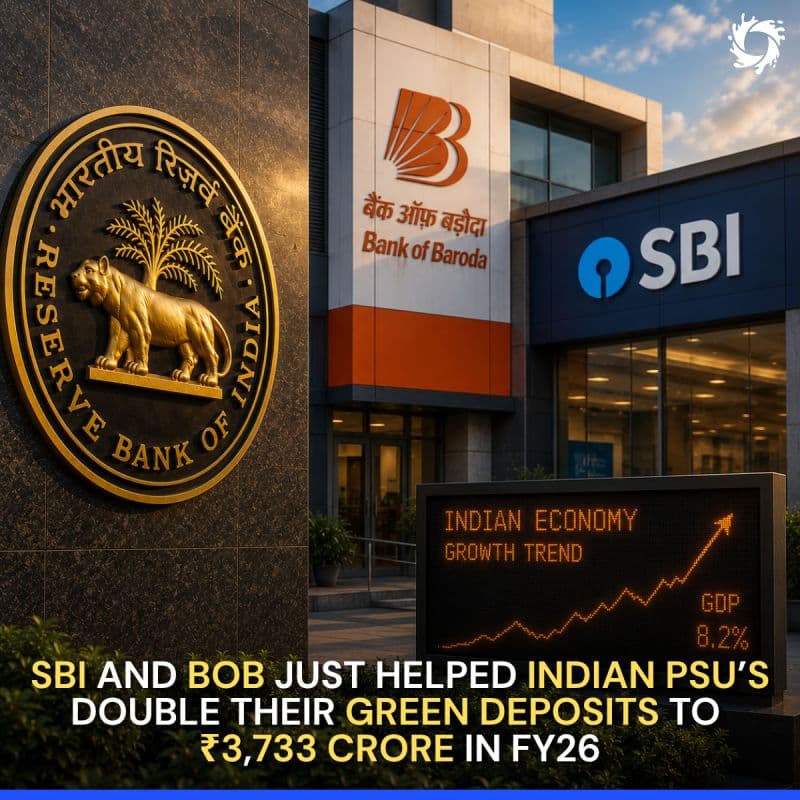
State Bank of India and Bank of Baroda have deployed green deposits entirely into renewable energy and EV loans, proving the RBI's ring-fenced capital model is working at scale.

100%Green deposit growth (YoY)
Indian public sector banks just doubled their "Green Deposits" in a single year. Here is how the banking sector is actively funding the climate transition.
Image: Finsamudra LinkedIn archive
₹3,733 CrGreen deposits deployed by PSUs

The Reserve Bank of India's Green Deposit Framework is moving from policy document to live balance sheet. Public sector banks doubled their green deposit portfolio in a single year, with ₹3,733 crore now ring-fenced for sustainable projects only.

The RBI's structural innovation is simple but strict: green deposits cannot flow into general corporate lending. Banks must explicitly deploy this capital into verifiable sustainable projects. This removes the greenwashing risk that has plagued ESG claims across Indian finance.

Bank of Baroda has channelled its green deposits entirely into large-scale renewable energy and clean mobility projects. State Bank of India has deployed its green deposits directly into its expanding electric vehicle retail loan portfolio—a direct link between deposit and end-use.

The 100% year-on-year growth rate is substantial, but the absolute base remains small. ₹3,733 crore represents a fraction of the deposit bases held by India's PSU banking giants. What matters is not today's size but the template now in place.

The RBI's framework appears to be working: structured capital ring-fencing, mandatory end-use verification, and public bank buy-in. This lays the foundational infrastructure for scale. Future growth will depend on whether retail depositors accept lower yields for climate-linked returns.

Why it matters

For DSAs and loan connectors, green deposits signal a new capital channel for sustainable lending. As PSU banks scale EV and renewable energy portfolios, loan distribution networks will need to develop underwriting and origination competencies in these asset classes. Margins on green lending products may differ from conventional unsecured lending.

For lenders and NBFCs, the RBI framework creates a structural advantage for banks in ESG-linked lending. Connectors and DSAs working with green-focused banks gain access to cheaper, dedicated capital. This reshapes lending economics across renewable energy and EV financing—segments that are capital-intensive and yield-sensitive.

More on the RBI

Every story on the RBI →

Sources

Join the conversation on LinkedIn →
Finsamudra DeskNewsroom · 18 Jun 2026, 1:00 pm IST
See all

Get the Morning Brief

India's lending news before your first call — subscribe free

The same daily intelligence 30,000+ CXOs, DSAs and finance professionals follow on LinkedIn, with the Finsamudra take.

The Morning Brief · Free

Get India's lending news before your first call

The daily intelligence 30,000+ finance professionals follow on LinkedIn, in one short email from the Finsamudra Desk.