Finsamudra Newsroom, home

Finsamudra Desk

RBI Governor calls for mindset shift as banks rethink MSME lending strategy

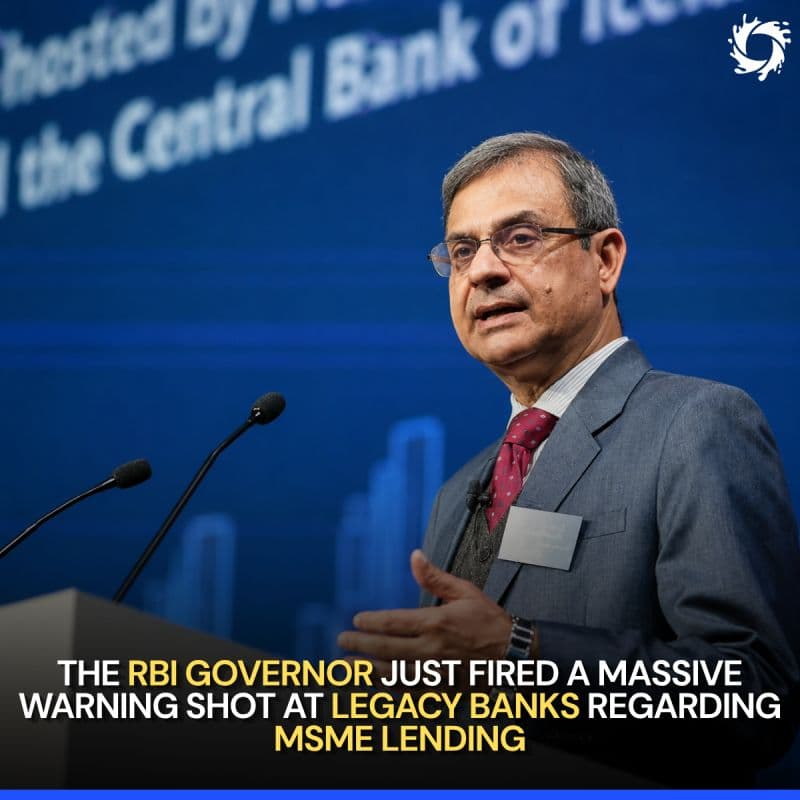
Reserve Bank of India Governor Sanjay Malhotra has pushed banks to move beyond hitting priority sector targets and build genuine MSME partnerships, backed by new digital infrastructure.

32 crore IndiansMSME sector employment
➤For decades, traditional Indian banks have largely viewed MSME lending
Image: Finsamudra LinkedIn archive

For decades, Indian banks have treated MSME lending as a regulatory checkbox—a priority sector lending quota to be met rather than a genuine profit centre. RBI Governor Sanjay Malhotra this week reframed the opportunity entirely, calling MSMEs the "nursery of entrepreneurship" and flagging that the sector currently employs over 32 crore Indians.

The structural barrier has always been collateral. Legacy banks rely on hard physical assets to underwrite credit, while most small businesses lack property or land to pledge. This mismatch has kept the MSME credit market chronically under-penetrated despite its size.

The RBI is now building digital public infrastructure to solve this problem. The Unified Lending Interface (ULI) will pull verified data directly from GST and income tax portals, enabling banks to execute rapid, cash-flow-based lending without demanding physical collateral. Think of it as the UPI moment for MSME credit.

The Account Aggregator Framework adds a second layer, allowing banks to access real-time financial data for dynamic risk assessment instead of relying on outdated annual audit reports. Together, these systems remove the collateral bottleneck.

Banks and fintechs that integrate deeply with this new digital infrastructure won't just hit their regulatory targets—they stand to capture the largest under-penetrated credit market in the world. The competitive advantage belongs to players who can operationalise these rails quickly.

Why it matters

For DSAs and loan connectors, this shift unlocks a massive addressable market that was previously closed to them. MSME borrowers who couldn't access bank credit due to collateral constraints now become eligible through cash-flow underwriting. This expands your eligible customer base and reduces customer acquisition friction.

For lenders—banks and NBFCs alike—the economics improve dramatically. Collateral-free, cash-flow-based lending allows faster turnaround, higher ticket velocity, and access to a credit-hungry segment. The playbook shifts from asset-heavy underwriting to data-led risk assessment, favouring players with digital-first operating models.

More on the RBI

Every story on the RBI →

Sources

Join the conversation on LinkedIn →
Finsamudra DeskNewsroom · 23 Jun 2026, 12:15 pm IST
See all

Get the Morning Brief

India's lending news before your first call — subscribe free

The same daily intelligence 30,000+ CXOs, DSAs and finance professionals follow on LinkedIn, with the Finsamudra take.

The Morning Brief · Free

Get India's lending news before your first call

The daily intelligence 30,000+ finance professionals follow on LinkedIn, in one short email from the Finsamudra Desk.