Finsamudra Newsroom, home

Finsamudra Desk

EPFO to centralize 34 crore accounts under CITES 2.0, automating PF transfers

The Employees Provident Fund Organisation will ratify a complete IT redesign on July 25, replacing decentralized regional databases with a unified national system. Automatic transfers, higher advance claim limits, and pre-validation will cut rejection rates.

Over 34 croreAccounts managed by EPFO
For decades, changing jobs in India meant dealing with one of the most frustrating bureaucratic chores: manually transferring your Provident Fund. The EPFO ( Employees Provident Fu
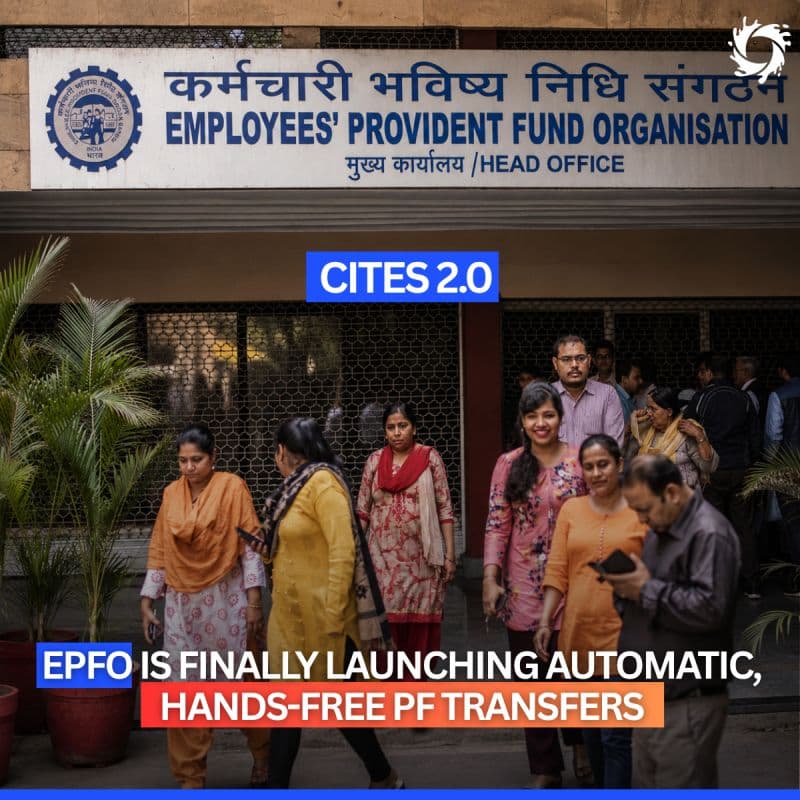
Image: Finsamudra LinkedIn archive
Up to ₹5 lakhAuto-settlement claim limit

For decades, Indian workers changing jobs faced a manual nightmare: transferring their Provident Fund across regional EPFO offices. The Employees Provident Fund Organisation operated on decentralized regional databases that required slow, error-prone coordination between offices when employees moved states.

On July 25, the EPFO's Central Board of Trustees will meet to ratify CITES 2.0, a complete centralization of its IT architecture managing over 34 crore accounts. The redesign replaces legacy systems with a single, unified national database—similar to the digital public infrastructure approach that powered UPI.

Under CITES 2.0, job changes will trigger automatic, hands-free account transfers via Aadhaar-linked UAN. Workers no longer need to manually coordinate transfers between their old and new regional offices. The system eliminates the friction points that historically caused rejections and delays.

The EPFO is also raising AI-driven auto-settlement limits for advance PF claims up to ₹5 lakh, removing manual approval bottlenecks. Pre-validation of claims before submission will automatically scan for errors, radically reducing rejection rates that plagued the old system.

This shift marks the EPFO's transition from administrative gatekeeping to automated, friction-free service delivery. By adopting centralized digital infrastructure, the organisation is modernizing how India's largest social security network operates at scale.

Why it matters

For loan agents and DSAs, PF transfer delays have historically blocked employment verification and income documentation during the credit origination process. Automatic PF transfers mean faster employment history confirmation and reduced documentation turnaround, speeding up loan approvals for salaried borrowers.

Lenders relying on PF contribution patterns for income validation will now access cleaner, consolidated data from a single national database. Higher claim settlement limits and lower rejection rates improve cash flow predictability for borrowers mid-application, reducing credit decisioning friction in the salaried lending segment.

Sources

Join the conversation on LinkedIn →
Finsamudra DeskNewsroom · 12 Jul 2026, 9:15 am IST
See all

Get the Morning Brief

India's lending news before your first call — subscribe free

The same daily intelligence 30,000+ CXOs, DSAs and finance professionals follow on LinkedIn, with the Finsamudra take.

The Morning Brief · Free

Get India's lending news before your first call

The daily intelligence 30,000+ finance professionals follow on LinkedIn, in one short email from the Finsamudra Desk.