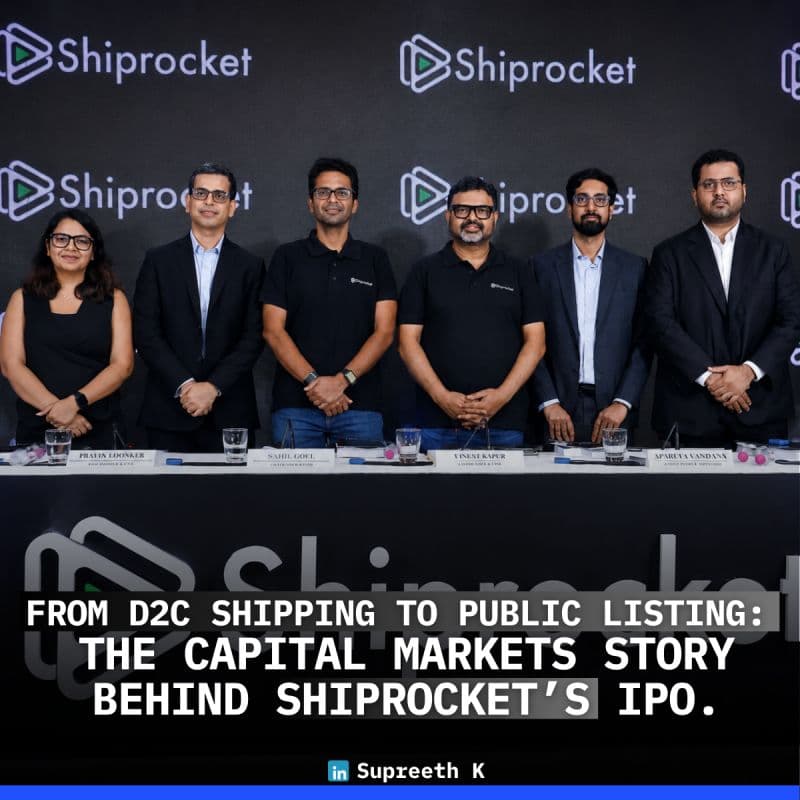
It comes down to three execution takeaways:
→ Building Infrastructure Over Buzz: Instead of competing as a direct D2C consumer brand, building the underlying logistics and fulfillment rails for 100,000+ merchants creates sticky, recurring platform revenue.
→ Calibrated Valuation Pricing: Setting the price band at ₹92–₹97 shows that founders and bankers learned from 2021—leaving upside on the table for public investors generates healthy post-listing momentum.
→ Strategic Capital Deployment: Raising ₹885 crore in primary capital for warehouse automation and software tech ensures that a public listing accelerates operational leverage rather than funding cash burn.
The public market no longer rewards hyper-scale at any cost—it rewards platform businesses with clear unit economics and sustainable paths to profitability.
For founders building for India's next decade, building essential ecosystem infrastructure remains one of the most resilient paths to Dalal Street.
As a founder or investor, do you think building backend enablement software is a more sustainable business model than direct-to-consumer brand building?
Share your perspective in the comments below.
hashtag
#Shiprocket
hashtag
#ShiprocketIPO
hashtag
#StartupFounders
hashtag
#Entrepreneurship
hashtag
#TechIPOs
hashtag
#D2C
hashtag
#CapitalMarkets
hashtag
#BusinessStrategy