Finsamudra Newsroom, home

Finsamudra Desk

India-EU trade deal covers 2 billion people, eliminates tariffs on ₹33 billion in exports

The largest bilateral agreement either side has signed removes duties on textiles, leather, pharma and gems, and is expected to come into force by end of 2026.

2 billionPeople covered by deal
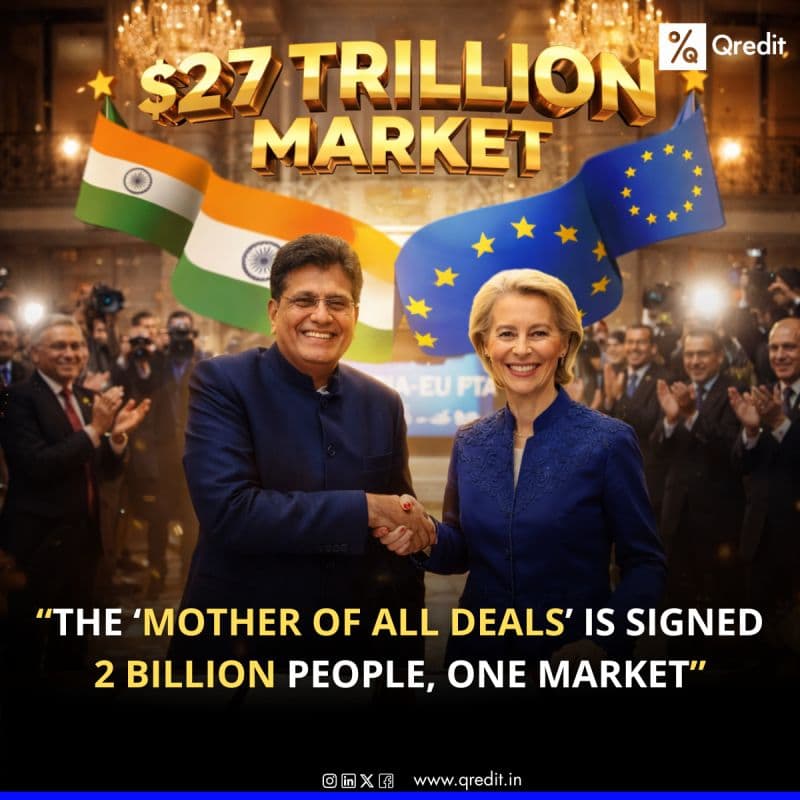
🇮🇳🇪🇺 India Just Signed the “Mother of All Deals” — Here’s Why It Changes Everything
Image: Finsamudra LinkedIn archive
$27 trillionCombined market size
$33 billionIndian exports now tariff-free

India and the European Union finalized their biggest bilateral trade agreement on January 27, 2026. The pact covers 2 billion people and represents a combined market of $27 trillion—roughly 25% of global GDP.

Indian exporters gain immediate tariff relief on goods critical to the country's manufacturing base. Textiles, leather, gems and jewelry now enter the EU duty-free, with $33 billion in exports freed from tariffs. The textile sector alone stands to add 6–7 million jobs.

EU consumers will see lower prices on Indian wines (tariffs drop to 20–30%), pharmaceuticals and chemicals (tariffs eliminated), while Indian car exports gain a 250,000-unit quota at reduced 10% tariffs. The agreement is also expected to save €4 billion annually in tariff costs.

Commerce Minister Piyush Goyal said the agreement is expected to come into force by the end of 2026, following ratification by both sides. The timing positions India as a manufacturing alternative to China as global supply chains reshape.

Why it matters

For India's lending ecosystem, this deal unlocks a critical economic growth engine. Textile exporters, gem traders, pharma manufacturers and auto suppliers will see improved cash flows and reduced working capital pressure as tariffs vanish. DSAs and connectors in export-heavy regions—particularly in Gujarat, Tamil Nadu and Maharashtra—should expect rising credit demand from these sectors as businesses expand capacity to meet new EU demand.

Higher export revenues translate to stronger repayment capacity for borrowers and lower credit risk for lenders. MSMEs in target sectors will have stronger collateral value and more predictable income streams, making them more bankable. NBFC partners should also prepare for increased factoring and supply-chain finance opportunities as Indian exporters manage the surge in cross-border transactions.

Sources

Join the conversation on LinkedIn →
Finsamudra DeskNewsroom · 29 Jan 2026, 2:15 pm IST
See all

Get the Morning Brief

India's lending news before your first call — subscribe free

The same daily intelligence 30,000+ CXOs, DSAs and finance professionals follow on LinkedIn, with the Finsamudra take.

The Morning Brief · Free

Get India's lending news before your first call

The daily intelligence 30,000+ finance professionals follow on LinkedIn, in one short email from the Finsamudra Desk.