Finsamudra Newsroom, home

Finsamudra Desk

Private sector capex surges to 71.3% of new projects post-COVID, reshaping India's growth

Bank of Baroda data shows private companies now drive infrastructure investment far more than government, with ₹191 lakh crore announced across green energy, EVs, logistics and data centers.

71.3%Private sector capex share (FY23–FY26)
➤A massive structural shift has quietly occurred in the Indian economy
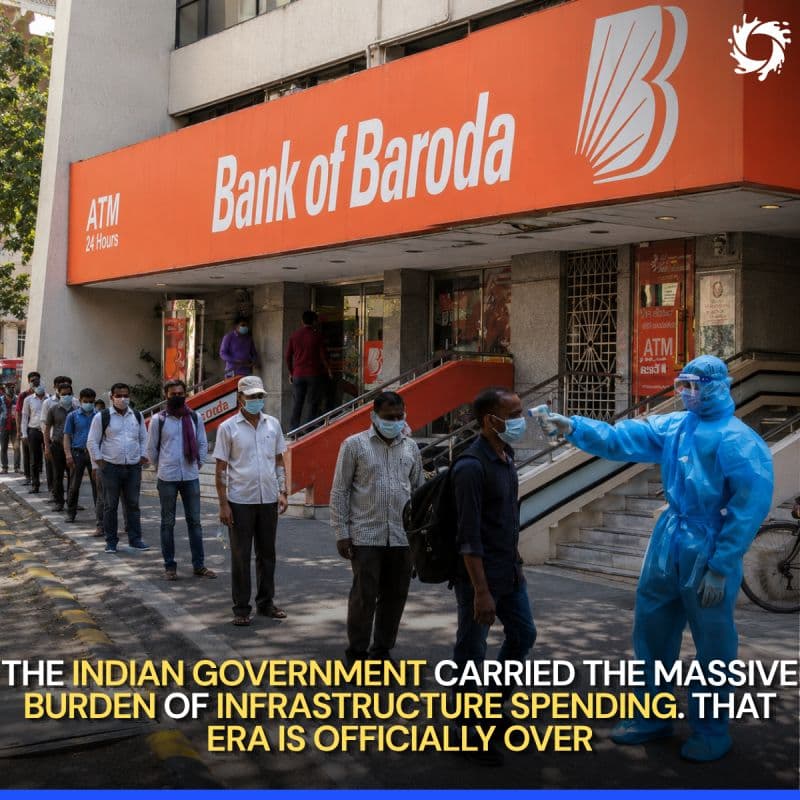
Image: Finsamudra LinkedIn archive
54%Pre-pandemic private capex share
₹191 lakh croreTotal private investment announced (4 years)

India's capital expenditure landscape has shifted decisively toward the private sector. According to a macroeconomic report from Bank of Baroda citing CMIE data, private companies accounted for 71.3% of new project announcements in FY23–FY26, up sharply from roughly 54% in the pre-pandemic era.

The scale is substantial: private firms have announced ₹191 lakh crore in new investment projects over the last four years. This represents a structural reorientation of how India's economy is building itself.

Nearly 50% of these private capex plans are flowing into Green Electricity, EV Infrastructure, and Transport & Logistics. A significant additional portion is directed toward IT sector infrastructure, particularly AI Data Centers—signaling where private capital sees long-term returns.

The economics differ fundamentally from government spending. When the public sector builds infrastructure, it often creates public goods. When private capital deploys ₹191 lakh crore, it typically builds profit-generating, scalable assets—what investors call durable competitive moats.

Companies supplying the engineering, construction, and technology services for this wave—EPC contractors, data center developers, green energy specialists—stand to benefit from what could be a multi-decade investment cycle if announcements materialize into actual deployment.

Why it matters

For DSAs and lending platforms, this capex boom signals rising credit demand from project developers, logistics operators, and renewable energy firms expanding infrastructure. Banks and NBFCs will compete to finance this wave, creating new distribution opportunities for loan originators who can serve these segments efficiently.

Loan agents and connectors should watch which sectors within this ₹191 lakh crore wave are closest to funding readiness. Green energy, EV infrastructure, and logistics typically require staged debt financing—meaning sustained demand for working capital and project finance products over the next 3–5 years.

Sources

Join the conversation on LinkedIn →
Finsamudra DeskNewsroom · 23 Jun 2026, 1:30 pm IST
See all

Get the Morning Brief

India's lending news before your first call — subscribe free

The same daily intelligence 30,000+ CXOs, DSAs and finance professionals follow on LinkedIn, with the Finsamudra take.

The Morning Brief · Free

Get India's lending news before your first call

The daily intelligence 30,000+ finance professionals follow on LinkedIn, in one short email from the Finsamudra Desk.