FinsamudraNewsroom

Finsamudra Desk

The Subhash Chandra NCLT Ruling: Balancing Insolvency Jurisprudence with Public Trust in India’s Credit System

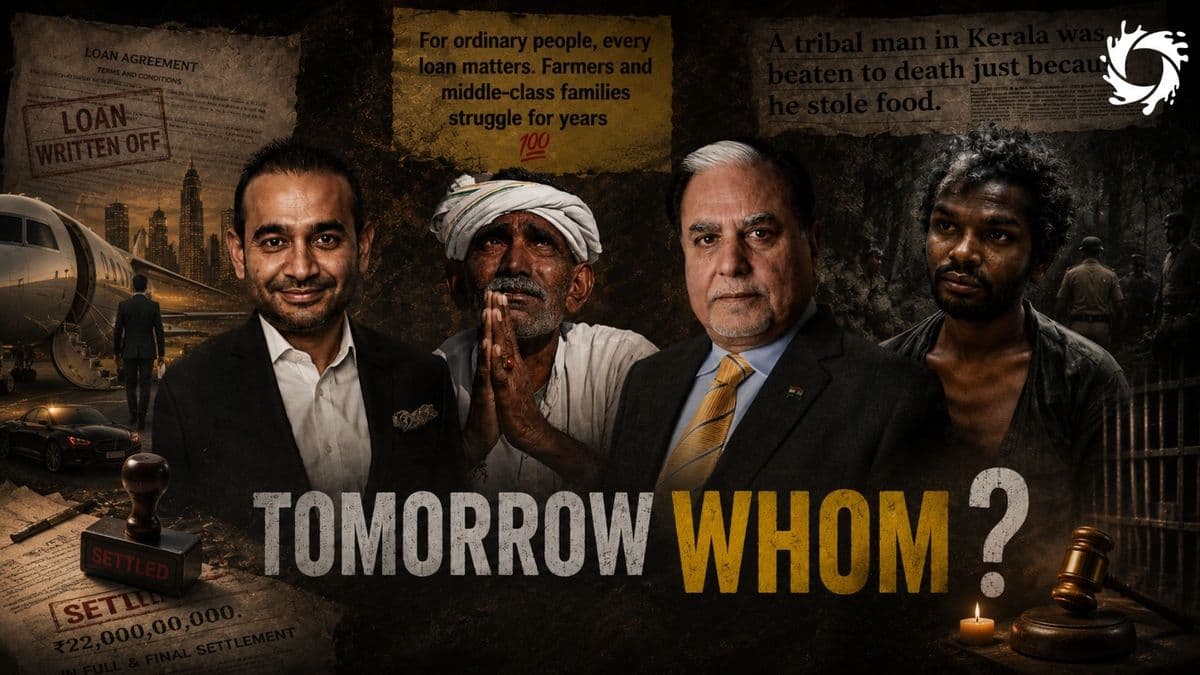
If an ordinary farmer defaults on a 50,000 rupee crop loan, recovery agents seize his tractor, but when corporate claims cross 22,000 crore rupees, a tribunal approves a 6.5 crore settlement.

22,000 CRNCLT Ruling
HERO IMAGE
Image: - FINSAMUDRA

Executive Summary

The National Company Law Tribunal (NCLT)’s approval of a personal insolvency repayment plan for Essel Group founder Subhash Chandra—allowing a ₹6.50 crore payout to settle ₹22,006.57 crore in admitted creditor claims—has sparked a significant national debate surrounding the fairness and equity of India's credit recovery architecture.

While the order was adjudicated under Section 114 of the Insolvency and Bankruptcy Code, 2016 (IBC), the resulting 99.97% optical haircut for institutional lenders has brought into sharp focus the structural divide between corporate bankruptcy protections and the aggressive recovery practices faced by ordinary retail and agricultural borrowers.


Financial & Legal Breakdown: Claims vs. Disclosures

ParameterNCLT Admitted ProceedingsPromoter Disclosures

Total Admitted Claims

₹22,006.57 Crore

₹5,311 Cr claimed / ₹4,262 Cr net reconciled

Original Principal Disbursed

—

₹4,808 Crore (to Essel corporate entities)

Amount Repaid by Borrowers

—

₹3,803 Crore (~79.1% of principal settled)

Residual Unpaid Principal

—

~₹998 Crore

Approved Settlement Payout

₹6.50 Crore (0.03% recovery)

Full personal guarantee discharge

Key Creditors Opposing

LIC Housing Finance, HDFC Bank, Axis Bank, Canara Bank, Union Bank of India (Moving NCLAT)


Legal Architecture: Understanding Corporate Personal Guarantees

To evaluate the tribunal’s decision objectively, legal and financial analysts point to several distinct technical factors governing corporate personal insolvencies:

1. Corporate Guarantee vs. Direct Personal Borrowing

Subhash Chandra clarified that he had taken zero personal loans. The admitted liabilities stem entirely from personal guarantees furnished to secure corporate borrowings for Essel Group’s infrastructure and media enterprises. When operating companies encounter distress, personal guarantors are legally called upon to satisfy corporate shortfalls, regardless of personal cash liquidity.

2. Compounded Penal Interest & Claim Inflation

According to disclosures by Chandra’s office, operating entities had already repaid ₹3,803 crore out of the original ₹4,808 crore disbursed, leaving a residual principal balance of ~₹998 crore. The explosion of admitted claims to ₹22,006 crore was the result of years of compounded penal default interest, contractual damages, and duplicate cross-guarantee claims across multiple subsidiaries.

3. Institutional Lenders Prepare NCLAT Appeal

Major commercial lenders—including LIC Housing Finance, HDFC Bank, Axis Bank, Canara Bank, and Union Bank of India—have confirmed plans to appeal the NCLT ruling before the National Company Law Appellate Tribunal (NCLAT), arguing that approving a 0.03% recovery undermines the enforceability of personal guarantees in corporate lending.


The Societal Divide: Corporate Restructuring vs. Retail Recovery

Beyond legal statutes, the case has highlighted a profound socio-economic contrast within India’s financial ecosystem:

  • Limited-Liability Frameworks vs. Individual Distress: Corporate promoters operate through sophisticated holding structures, limited-liability subsidiaries, and family trusts that insulate personal lifestyles from corporate collapse. In contrast, individual retail and agricultural borrowers carry direct, unlimited personal liability.
  • The Rigor of Retail Debt Collection: When a small farmer or salaried worker defaults on a ₹50,000 crop loan or vehicle EMI, financial institutions deploy aggressive collection mechanisms, including asset seizures, agricultural land attachments, and public distress. Conversely, multi-thousand-crore corporate debt defaults undergo years of structured judicial mediation.

Why it matters

Banking Policy & Institutional Trust Outlook

The Subhash Chandra personal insolvency case represents a critical milestone for India’s corporate resolution framework.

For the Insolvency and Bankruptcy Code to maintain long-term institutional legitimacy, personal guarantor resolutions must balance genuine debtor rehabilitation with rigorous asset realization. Establishing transparent, equitable enforcement across both corporate boardrooms and rural retail banking remains essential to sustaining public faith in India's financial system.

Sources

Finsamudra Desk1 Sept 2026, 12:39 am IST

Refer loans to banks and NBFCs? Become a loan DSA partner

See all

Finsamudra Desk

Supervisory Continuity in Co-operative Banking: Inside the RBI’s One-Year Extension for Abhyudaya Co-operative Bank’s Administrator

On November 9, 2026, via Press Release 2026-2027/1473, the Reserve Bank of India (RBI) exercised its statutory powers under sub-section (1) of Section 36AAA read with Section 56 of the Banking Regulation Act, 1949, extending the supersession of the Board of Directors of Abhyudaya Co-operative Bank Ltd., Mumbai for a further period of one year effective November 24, 2026.

Business3 min read

Finsamudra Desk

The Sovereign Cross-Border Gateway: Inside Razorpay’s Final IFSCA Licence in GIFT City

India’s cross-border financial plumbing has reached a decisive turning point. Razorpay Software Private Limited, one of India's preeminent financial technology giants, has officially received its final Payment Service Provider (PSP) licence from the International Financial Services Centres Authority (IFSCA) to operate full-stack cross-border money movement out of GIFT City, Gujarat.

Business3 min read

Finsamudra Desk

Anatomy of an Insider Siphon: How ₹35 Crore Vanished Silently from PNB Greater Noida

A major operational and internal control failure has emerged at Punjab National Bank’s (PNB) Aichhar branch near Sector Pi-1 in Greater Noida, Uttar Pradesh. Dozens of depositors—primarily farmers who had deposited government compensation payouts for land acquisition—discovered that nearly ₹35 crore had been siphoned off from their savings accounts and fixed deposits without their consent.

Business3 min read

Get the Morning Brief

India's banking and finance news before your first call — subscribe free

The same daily intelligence 41,000+ CXOs, DSAs and finance professionals follow on LinkedIn, with the Finsamudra take.

The Morning Brief · Free

Get India's banking and finance news before your first call

The daily intelligence 41,000+ finance professionals follow on LinkedIn, in one short email from the Finsamudra Desk.