Finsamudra Newsroom, home

Finsamudra Desk

Fact Check: Will UPI Payments Above ₹2,000 Attract Charges? Here Is What Happens When You Pay ₹2,500, ₹5,000, or ₹20,000

The Ministry of Finance’s Section 10A notification does not tax consumers. Here is a clear breakdown of the statutory shield, P2P exemptions, and what a future merchant MDR actually means.

₹2,000UPI Limit
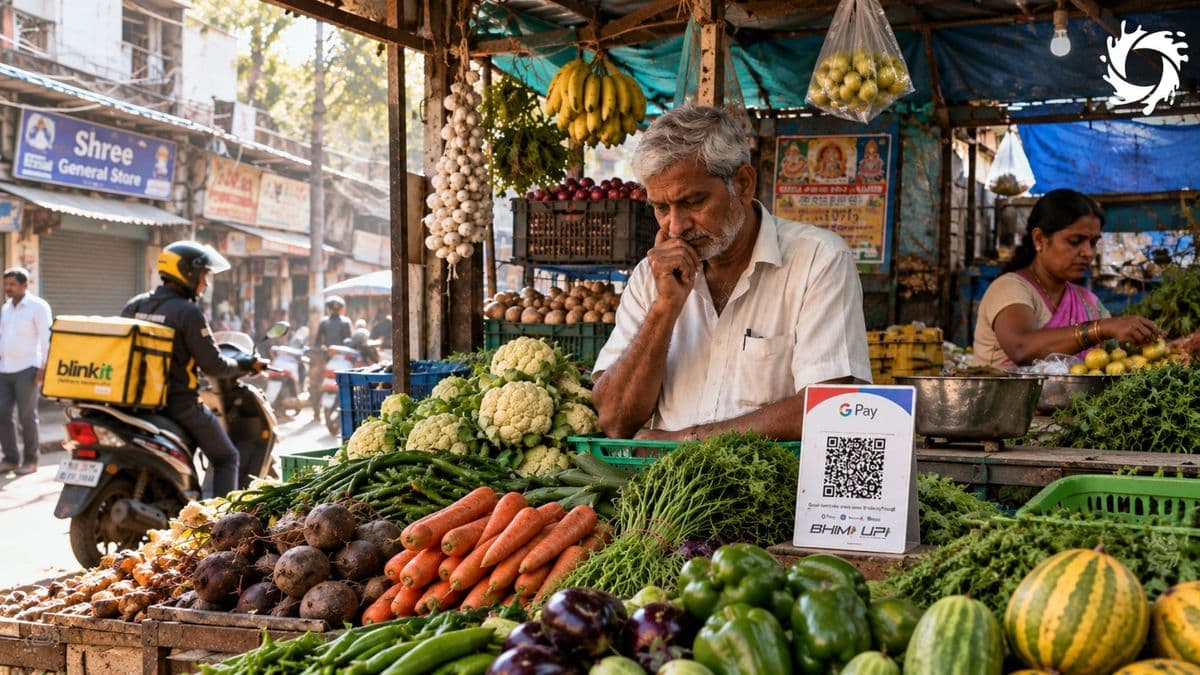
HERO IMAGE
Image: - FINSAMUDRA

A recent gazette notification by the Ministry of Finance has reignited viral rumors across messaging platforms and social networks, with claims suggesting that peer-to-peer and merchant UPI payments over ₹2,000 will now incur a surcharge.

The reality is starkly different: Consumers will not pay a single paisa extra on UPI transactions of any ticket size.

The notification issued under Section 10A of the Payment and Settlement Systems (PSS) Act, 2007, formalizes a legal "zero-charge shield" for transactions up to ₹2,000, while leaving Person-to-Person (P2P) transfers completely exempt. For high-value Person-to-Merchant (P2M) purchases, any eventual processing charge will be borne exclusively by merchants, not end users.

Here is a comprehensive breakdown of the statutory notification, what changes on the ground, and how it impacts consumers, merchants, and fintech platforms.


1. What Did the Finance Ministry Actually Notify?

Following statutory amendments passed by Parliament in August 2026, the Ministry of Finance issued Notification S.O. 5067(E) on September 14, 2026. Under the amended Section 10A of the PSS Act, the government specified two digital payment modes where banks and payment aggregators are strictly prohibited from levying any direct or indirect charges:

  1. Unified Payments Interface (UPI) transactions up to ₹2,000
  2. RuPay-powered debit cards

The ₹2,000 number is not a spending ceiling or transfer cap. It is an explicit legislative floor designed to ensure small retail payments (which constitute over 75% of total UPI volumes) remain permanently immune from any future merchant discount rates or bank fees.


2. Person-to-Person (P2P) Transfers: Completely Free Across All Ticket Sizes

One of the most widespread misconceptions is that sending money to family or settling shared bills above ₹2,000 will attract fees.

  • Transferring ₹2,500 to a friend: Zero fee.
  • Sending ₹5,000 to family: Zero fee.
  • Paying ₹20,000 or ₹50,000 for house rent via UPI: Zero fee.

The government and the National Payments Corporation of India (NPCI) have reiterated that the P2P transfer rail remains completely cost-free for all citizens.


3. Person-to-Merchant (P2M): Does Paying a Merchant Above ₹2,000 Cost More?

When you scan a QR code at a grocery supermarket, electronics store, or restaurant:

  • Customer Deductions: If your grocery bill is ₹5,000, your bank account will be debited exactly ₹5,000. Under no regulatory circumstance will an end consumer be billed ₹5,020.
  • Current Status: As of today, there is no new charge active on merchant transactions either.
  • Future Framework: By shielding transactions up to ₹2,000 under Section 10A, the government has created enabling room for regulators (RBI, NPCI, and the UPI Steering Committee) to decide whether a Merchant Discount Rate (MDR) should be reintroduced for large commercial merchants (>₹2,000) to support backend server infrastructure and cybersecurity investments.

4. What Is the Proposed 0.4% MDR and How Would It Work?

Discussions reported by Reuters suggest that payment industry participants and regulators are considering an indicative 0.4% MDR on commercial payments above ₹2,000, tailored specifically for large corporate and retail enterprises.

If such a framework is eventually formalized, the processing cost would be deducted from the merchant's net settlement:

Transaction TypePayment AmountAmount Paid by CustomerCustomer FeeIllustrative Merchant Settlement (At 0.4% MDR if enacted)

P2P Transfer

₹2,500

₹2,500

₹0.00

Full ₹2,500 received by recipient

P2M Grocery Bill

₹2,500

₹2,500

₹0.00

₹2,490 net (illustrative ₹10 MDR absorbed by merchant)

P2M Retail Store

₹5,000

₹5,000

₹0.00

₹4,980 net (illustrative ₹20 MDR absorbed by merchant)

P2M Electronics

₹20,000

₹20,000

₹0.00

₹19,920 net (illustrative ₹80 MDR absorbed by merchant)

P2P Rent Transfer

₹20,000

₹20,000

₹0.00

Full ₹20,000 received by landlord

(Note: The 0.4% MDR is purely an indicative industry discussion. No effective date, tiering structure, or sharing formula has been notified by the Reserve Bank of India or NPCI).

Why it matters

Since January 2020, India has enforced a mandatory zero-MDR regime on UPI and RuPay debit cards. While this policy spurred unprecedented digital adoption—driving UPI volumes past 15 billion monthly transactions—it also created financial stress for acquiring banks, payment aggregators, and fintechs who bear server, security, and dispute resolution costs without direct interchange revenue.

By ring-fencing micro-transactions up to ₹2,000 (protecting small vendors, kirana shops, and everyday consumer payments), the government has laid the groundwork for a balanced, sustainable ecosystem:

  1. Financial Inclusion Preserved: Small merchants and everyday users remain 100% shielded from costs.
  2. Infrastructure Sustainability: Large commercial enterprises that traditionally pay 1.5% to 2% MDR on credit cards could absorb a modest 0.4% MDR on high-value UPI payments, providing vital revenue to maintain payment rails.

The Verdict

  • For Consumers: Nothing changes. UPI remains 100% free for all your spending and personal transfers.
  • For Small Kirana Stores: Legally protected under Section 10A up to ₹2,000.
  • For High-Value Commercial Payments: Any future MDR will be borne on the merchant side, pending formal guidelines from the RBI and NPCI.


Sources

Finsamudra Desk16 Sept 2026, 11:49 am IST
See all

Finsamudra Desk

The Sovereign Cross-Border Gateway: Inside Razorpay’s Final IFSCA Licence in GIFT City

India’s cross-border financial plumbing has reached a decisive turning point. Razorpay Software Private Limited, one of India's preeminent financial technology giants, has officially received its final Payment Service Provider (PSP) licence from the International Financial Services Centres Authority (IFSCA) to operate full-stack cross-border money movement out of GIFT City, Gujarat.

Business3 min read

Finsamudra Desk

Anatomy of an Insider Siphon: How ₹35 Crore Vanished Silently from PNB Greater Noida

A major operational and internal control failure has emerged at Punjab National Bank’s (PNB) Aichhar branch near Sector Pi-1 in Greater Noida, Uttar Pradesh. Dozens of depositors—primarily farmers who had deposited government compensation payouts for land acquisition—discovered that nearly ₹35 crore had been siphoned off from their savings accounts and fixed deposits without their consent.

Business3 min read

Get the Morning Brief

India's lending news before your first call — subscribe free

The same daily intelligence 30,000+ CXOs, DSAs and finance professionals follow on LinkedIn, with the Finsamudra take.

The Morning Brief · Free

Get India's lending news before your first call

The daily intelligence 30,000+ finance professionals follow on LinkedIn, in one short email from the Finsamudra Desk.