FinsamudraNewsroom

Finsamudra Desk

CBI Charge-Sheets 6 IAS Officers in ₹504 Crore IDFC First Bank and AU Small Finance Bank Treasury Diversion Case

When six senior IAS officers and thirty-one bank officials are charge-sheeted together, modern banking risk management faces an uncomfortable truth. The biggest threat to a bank balance sheet is rarely bad credit underwriting. It is the failure of basic treasury custody controls.

₹504-crore scamOFFICIAL CBI CHARGE SHEET
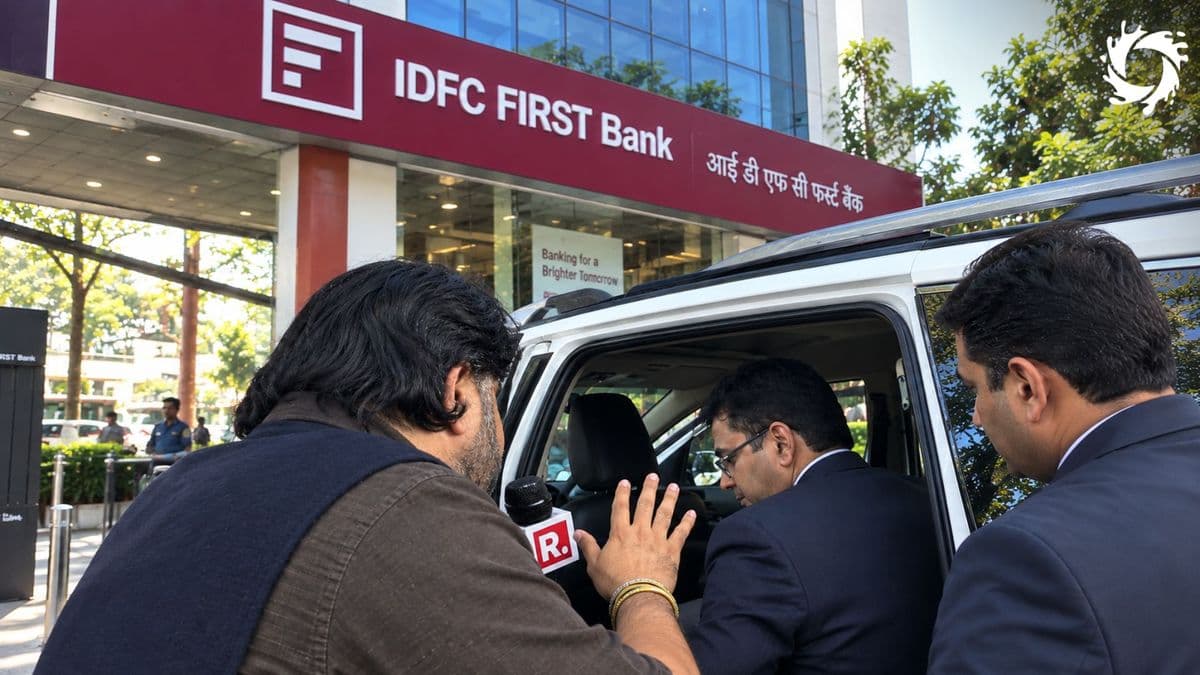
HERO IMAGE
Image: - FINSAMUDRA

Executive Summary

The Central Bureau of Investigation (CBI) has submitted its third charge sheet before the Special CBI Court in Panchkula, formally naming six senior Haryana-cadre Indian Administrative Service (IAS) officers alongside branch personnel from IDFC First Bank and AU Small Finance Bank in a ₹504 crore ($60 million+) public fund misappropriation case.

The investigative filing—which elevates the total number of charge-sheeted individuals in the case to 37—documents an organized financial conspiracy in which treasury funds across eight Haryana state departments and statutory boards were diverted into select private bank branches. The transactions were masked through the issuance of counterfeit Fixed Deposit (FD) receipts while the underlying capital was systematically siphoned into unrelated third-party commercial entities.


Case Overview & Forensic Data Matrix

ParameterCase Details & Legal Classifications

Investigating Agency

Central Bureau of Investigation (CBI)

Judicial Forum

Special CBI Court, Panchkula (Filed September 2, 2026)

Quantum of Siphoned Capital

₹504 Crore across 8 Haryana state government entities

Key IAS Officers Named

• Mohammad Shayin (then MD, Haryana Power Generation Corp Ltd - HPGCL)
• Saket Kumar (then Commissioner & Secy, Development & Panchayats Dept)
• Pardeep Kumar (then Member Secy, Haryana State Pollution Control Board - HSPCB)
• Vineet Garg (then Chairman, HSPCB)
• Ram Kumar Singh (then Panchkula Municipal Commissioner)
• Pankaj Agarwal (then Chairman, Haryana State Agricultural Marketing Board - HSAMB)

Financial Institutions Named

IDFC First Bank and AU Small Finance Bank (Specific branch personnel and accounts under investigation)

Total Accused

37 Individuals (Bureaucrats, bank branch managers, and private intermediaries)

Statutory Charges

Sections under the Bharatiya Nyaya Sanhita (BNS) for criminal conspiracy, cheating, forgery, destruction of evidence, falsification of accounts, criminal breach of trust, and provisions of the Prevention of Corruption Act (PC Act)


Four Critical Governance Failures Exposed by the Investigation

The CBI's forensic investigation reveals structural blind spots in how institutional public deposits are managed, issued, and verified within commercial banking branches:

1. Counterfeit Fixed Deposit Generation

The conspiracy operated on the premise that corporate term deposits are universally regarded as low-risk cash equivalents. By generating counterfeit physical and digital Fixed Deposit receipts at the branch counter, branch operators provided government boards with paper confirmation while diverting the actual capital into unauthorized accounts.

2. Branch-Level Collusion Overriding Digital Surveillance

While modern commercial banks deploy advanced AI models to monitor retail payment spikes and money-mule activity, high-value institutional treasury diversions remain vulnerable to manual collusion. When authorized state signatories coordinate directly with branch-level operations personnel, transaction flags are routinely bypassed or overridden internally.

3. Chasing High-Value Government Deposit Floats

Intense commercial competition among private and mid-sized lenders to attract state government balances often leads to compromised compliance. The commercial pressure to secure multi-hundred-crore institutional floats can erode standard scrutiny regarding source-of-funds verification and end-beneficiary validation.

4. The Absence of Real-Time Central Treasury Reconciliation

The siphoning mechanism operated undetected across multiple audit cycles because periodic reconciliations relied on account statements provided directly by the servicing branch. In the absence of an automated, direct API link between the state treasury's Integrated Financial Management System (IFMS) and the bank's Core Banking Solution (CBS), paper discrepancies remained hidden.


Why it matters

Institutional Banking & Public Treasury Risk Outlook

The ₹504 crore Haryana government diversion case demonstrates that the greatest risk facing commercial bank operations is often not credit underwriting defaults, but internal custody and operational vulnerabilities within branch networks.

As judicial proceedings progress in the Special CBI Court, the findings are expected to prompt stricter central bank and state government guidelines, mandating automated cryptographic locking of institutional fixed deposits, dual-key digital confirmations with state finance departments, and the complete elimination of manual branch-level term deposit issuance across the Indian banking sector throughout FY27 and beyond.

More on IDFC FIRST

Every story on IDFC FIRST →

Sources

Finsamudra Desk4 Sept 2026, 11:20 am IST
See all

Finsamudra Desk

The Sovereign Cross-Border Gateway: Inside Razorpay’s Final IFSCA Licence in GIFT City

India’s cross-border financial plumbing has reached a decisive turning point. Razorpay Software Private Limited, one of India's preeminent financial technology giants, has officially received its final Payment Service Provider (PSP) licence from the International Financial Services Centres Authority (IFSCA) to operate full-stack cross-border money movement out of GIFT City, Gujarat.

Business3 min read

Finsamudra Desk

Anatomy of an Insider Siphon: How ₹35 Crore Vanished Silently from PNB Greater Noida

A major operational and internal control failure has emerged at Punjab National Bank’s (PNB) Aichhar branch near Sector Pi-1 in Greater Noida, Uttar Pradesh. Dozens of depositors—primarily farmers who had deposited government compensation payouts for land acquisition—discovered that nearly ₹35 crore had been siphoned off from their savings accounts and fixed deposits without their consent.

Business3 min read

Get the Morning Brief

India's banking and finance news before your first call — subscribe free

The same daily intelligence 41,000+ CXOs, DSAs and finance professionals follow on LinkedIn, with the Finsamudra take.

The Morning Brief · Free

Get India's banking and finance news before your first call

The daily intelligence 41,000+ finance professionals follow on LinkedIn, in one short email from the Finsamudra Desk.