Finsamudra Newsroom, home

Finsamudra Desk

NPCI BHIM app triples transaction volume in 11 months, captures Tier 2-3 markets

Government-backed BHIM processed ₹26,952 crore in May 2026 alone as hyper-localization and micro-transaction focus challenge PhonePe and Google Pay dominance.

₹26,952 croreMay 2026 monthly transaction value
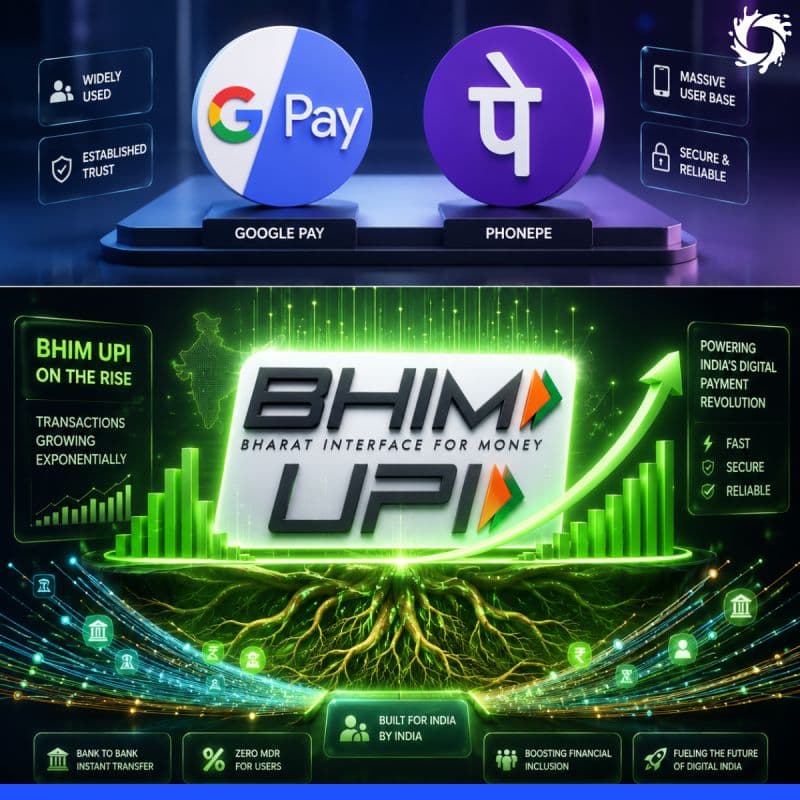
Everyone thought PhonePe and Google Pay had completely monopolized the Indian UPI market. But the government-backed NPCI BHIM app is quietly staging a massive comeback.
Image: Finsamudra LinkedIn archive
79.64 million → 244 million (11 months)Transaction volume growth
Nearly 50%Micro-transaction share of new volume

NPCI BHIM Payments App has posted a striking operational turnaround. Transaction volumes surged from 79.64 million monthly transactions in June 2025 to 244 million by May 2026—a three-fold increase in eleven months. In May 2026 alone, the app processed ₹26,952 crore in transactions.

The growth strategy diverged sharply from private competitors. While PhonePe and Google Pay pursued aggressive monetization through insurance and lending cross-sells, NPCI BHIM focused on grassroots accessibility. The app expanded support to over 15 regional languages, directly targeting under-served users in Tier 2 and Tier 3 cities where digital payment adoption had lagged.

The transaction mix reveals where growth is concentrating. Nearly 50% of the new volume derives from micro-transactions rather than large transfers. Local groceries account for 24% of activity, food outlets 18%, and quick commerce 11%. This pattern suggests BHIM is capturing daily spending habits in price-sensitive, smaller-city markets.

The timing aligns with regulatory priorities. The Reserve Bank has repeatedly signaled concerns about duopoly concentration in UPI and pushed for market share caps on dominant apps. NPCI BHIM's resurgence directly addresses this policy objective and demonstrates viability of a government-backed alternative in a market long seen as locked between two private players.

Why it matters

For DSAs and loan connectors, BHIM's growth into Tier 2-3 micro-merchant ecosystems opens a new distribution channel. These localities are where underbanked borrowers cluster—the same population DSAs and connectors target for small-ticket personal and business loans. As BHIM's transaction volume grows in grocery, food, and quick commerce, payment history trails become available for credit assessment and loan origination.

For lenders and NBFCs, BHIM's expansion reduces dependency on PhonePe and Google Pay data partnerships for digital payment intelligence. A competitive, multi-app UPI landscape means more data sources for credit decisioning and reduces the risk of any single platform wielding disproportionate influence over fintech lending economics. Regulatory pressure for market share caps will likely persist, making alternative payment rails strategically valuable.

Sources

Join the conversation on LinkedIn →
Finsamudra DeskNewsroom · 25 Jun 2026, 11:15 am IST
See all

Finsamudra Desk

Scaling Beyond ₹1,500 Crore: Why Amit Saini’s Appointment Anchors Namdev Finvest’s Risk Moat

The appointment of Amit Saini as Head of Risk Management at Namdev Finvest Limited marks a vital governance consolidation for the Jaipur-headquartered non-banking financial company (NBFC). Saini brings extensive experience across risk governance, internal audit, and credit controls, having previously served as Chief Risk Officer at Choice, with formative tenures at Laxmi India Finance and benchmark affordable housing lender Aavas Financiers Ltd.

Startups1 min read

Get the Morning Brief

India's lending news before your first call — subscribe free

The same daily intelligence 30,000+ CXOs, DSAs and finance professionals follow on LinkedIn, with the Finsamudra take.

The Morning Brief · Free

Get India's lending news before your first call

The daily intelligence 30,000+ finance professionals follow on LinkedIn, in one short email from the Finsamudra Desk.