Finsamudra Newsroom, home

Finsamudra Desk

IAS officer arrested in ₹60 Cr fund diversion case exposes banking compliance gaps

CBI charge-sheeted 17 people including bank staff in a scheme where government funds were funneled into shell entities via branch-level collusion, raising questions about AML controls at lenders.

₹60 CrGovernment funds diverted
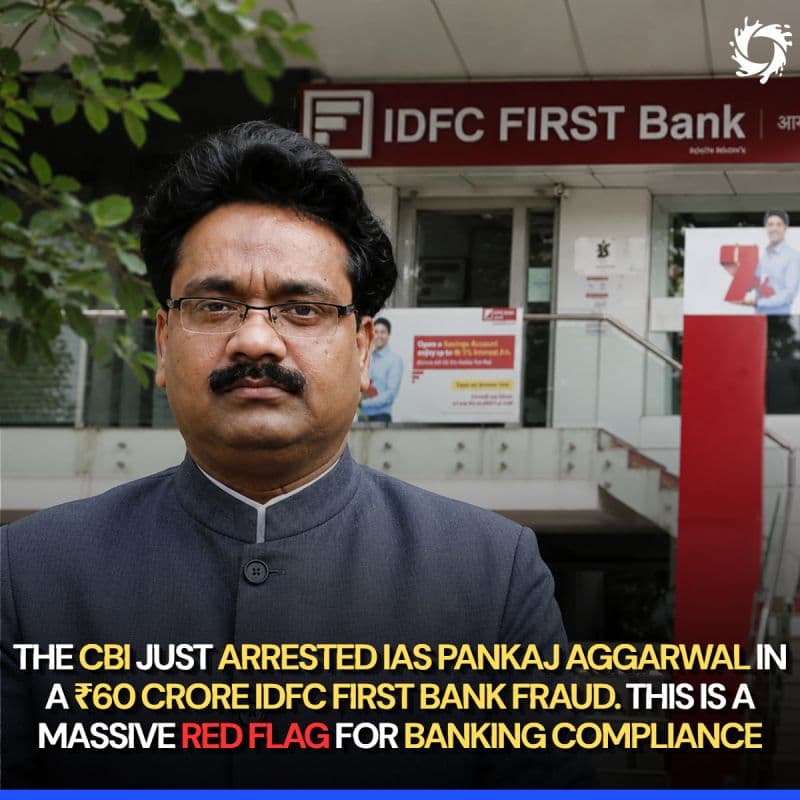
➜Yesterday, the Central Bureau Of Investigation. officially arrested
Image: Finsamudra LinkedIn archive
₹500+ CrTotal syndicate scale
17 individualsPeople charge-sheeted by CBI

The Central Bureau of Investigation arrested senior IAS officer Pankaj Aggarwal yesterday in connection with the unauthorized diversion of government funds. While serving as Principal Secretary in the Haryana Government, Aggarwal allegedly facilitated the opening of government department bank accounts at an IDFC FIRST Bank branch in Chandigarh without authorization.

Over ₹60 crore of government funds were subsequently moved into these accounts in violation of state finance guidelines. The case is part of a wider ₹500+ crore syndicate in which funds were systematically siphoned off through shell entities, suggesting deep collusion between corrupt bank officials and government bureaucrats.

The CBI has charge-sheeted 17 individuals across the wider probe, including several bank employees. The case exposes how local branch-level managers can circumvent central banking compliance systems when working in concert with high-level government officials.

At its core, this is a failure of anti-money laundering (AML) triggers and real-time monitoring. A local branch opened high-value government accounts and moved substantial sums into shell entities without central corporate compliance systems raising alarms—a critical gap in banking surveillance infrastructure.

The collusion pattern—between a powerful bureaucrat and localized bank staff—highlights a blind spot in modern banking algorithms. While systems are designed to catch large-value transactions, hyper-localized, coordinated manipulation between trusted insiders at branch level often escapes detection.

For banks aggressively chasing government deposits to improve CASA ratios, this case serves as a stark warning: systemic risk becomes catastrophic when compliance fails at the branch level.

Why it matters

For DSAs, loan connectors, and banks in India's credit distribution network, this case underscores a fundamental truth: your lending risk is only as strong as your weakest compliance node. If a tier-1 bank's branch-level controls can be compromised by insider collusion, the message is clear—compliance automation and central oversight must actively monitor local anomalies, not just national-level thresholds. For DSA partners handling government or quasi-government lending, this raises the bar on due diligence of your banking counterparties.

For lenders pursuing government or institutional deposits, the compliance cost of that CASA growth just became visible and expensive. Regulatory scrutiny will tighten, audit requirements will expand, and branch-level accountability will be enforced more strictly. The economics of chasing large government accounts now must factor in enhanced compliance staffing and real-time transaction monitoring—costs that were previously treated as optional overhead.

Sources

Join the conversation on LinkedIn →
Finsamudra DeskNewsroom · 23 Jun 2026, 11:31 am IST
See all

Get the Morning Brief

India's lending news before your first call — subscribe free

The same daily intelligence 30,000+ CXOs, DSAs and finance professionals follow on LinkedIn, with the Finsamudra take.

The Morning Brief · Free

Get India's lending news before your first call

The daily intelligence 30,000+ finance professionals follow on LinkedIn, in one short email from the Finsamudra Desk.