Finsamudra Newsroom, home

Finsamudra Desk

Jana Holdings cuts stake in Jana Bank from 16.95% to below 10% after debt default

The promoter entity has failed to meet bond repayment obligations, forcing a rapid liquidation of its equity stake. The bank itself remains unaffected due to RBI ring-fencing rules.

IND D (Default)Holding company debt rating
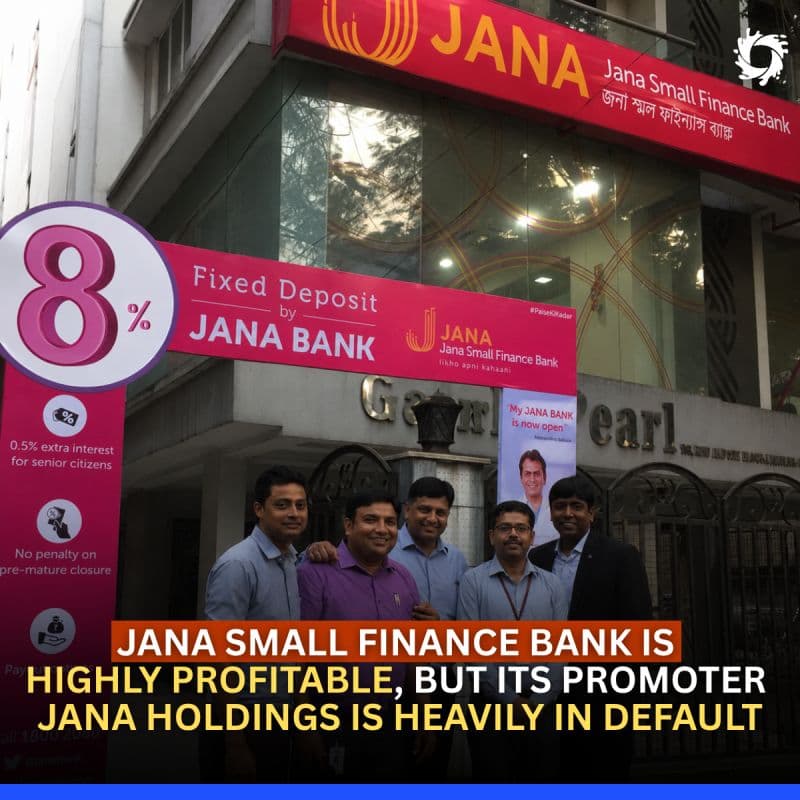
Yesterday, Jana Holdings—the powerful promoter entity of Jana Small Finance Bank—announced a desperate, highly strategic move.
Image: Finsamudra LinkedIn archive
16.95% → below 10%Jana Holdings equity stake reduction
ZeroCross-default linkage between HoldCo and bank

Jana Holdings, the promoter entity of Jana Small Finance Bank, announced yesterday that it is paring down its equity stake from 16.95% to below 10%—a move that will strip it of official promoter status. The decision marks a dramatic reversal for the entity that built and controlled the bank.

The catalyst: Jana Holdings is in default. The holding company took on substantial debt from aggressive bondholders including PE giant TPG Asia. It failed to meet June repayment obligations and was forced to extend maturity to December. Ratings agencies immediately downgraded the holding company's debt to 'IND D' (Default), officially labeling it a distressed debt exchange.

Rather than face prolonged legal battles with bondholders, Jana Holdings is liquidating its most valuable asset—the equity stake in the bank—to service the debt. This forced sale is the outcome of leverage taken at the holding company level, not at the bank level itself.

The critical detail: Jana Small Finance Bank itself remains entirely unaffected. RBI ring-fencing regulations create zero cross-default linkage between the holding company and the bank. Retail deposits and daily operations continue uninterrupted, fully regulated, and fully safe.

The broader lesson plays out in real time across Indian corporate structures: promoters who lever up aggressively at the holding company level risk losing control of the operating entity, even when that entity is highly profitable and financially sound. Jana Bank's profitability could not protect Jana Holdings from its own debt crisis.

Why it matters

For DSAs, connectors, and lenders: this episode underscores a critical distinction in credit markets. A bank's safety depends on its own capital, deposits, and regulatory standing—not its promoter's solvency. Jana Bank's retail deposit base and lending book remain RBI-protected. However, promoter instability can signal broader governance questions and may influence how institutional lenders and partners assess long-term relationship risk.

For loan distribution networks and fintech operators: the Jana case demonstrates why operational ring-fencing between holding companies and lending entities matters. If your distribution counterparty faces promoter-level distress, your actual loan flows and compliance obligations remain insulated—but you should monitor whether such distress affects management continuity, strategic direction, or regulatory cooperation.

Sources

Join the conversation on LinkedIn →
Finsamudra DeskNewsroom · 1 Jul 2026, 1:15 pm IST
See all

Get the Morning Brief

India's lending news before your first call — subscribe free

The same daily intelligence 30,000+ CXOs, DSAs and finance professionals follow on LinkedIn, with the Finsamudra take.

The Morning Brief · Free

Get India's lending news before your first call

The daily intelligence 30,000+ finance professionals follow on LinkedIn, in one short email from the Finsamudra Desk.