Finsamudra Newsroom, home

Finsamudra Desk

Supreme Court seeks responses on HDFC CEO case linked to ₹65 crore bank recovery

The top court is examining allegations against Sashidhar Jagdishan after the Bombay High Court quashed an FIR, but has asked the CBI and police to clarify claims about personal benefits tied to a hospital trust dispute.

₹2.05 croreAlleged illegal payments
🔹 The Supreme Court of India has officially sought responses from the CBI and Mumbai Police regarding a high-profile plea filed by the Lilavati Kirtilal Mehta Medical Trust agains
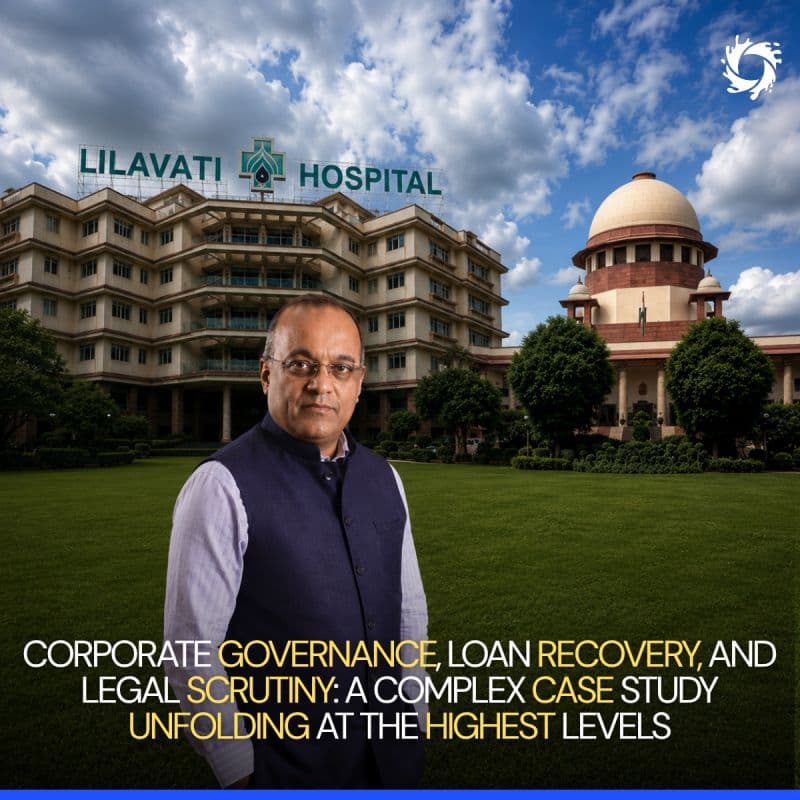
Image: Finsamudra LinkedIn archive
₹65 croreUnpaid dues under recovery

The Supreme Court of India has issued notices to the CBI and Mumbai Police asking for their responses to a plea filed by the Lilavati Kirtilal Mehta Medical Trust against HDFC Bank MD & CEO Sashidhar Jagdishan. The Trust alleges that the bank chief colluded with former hospital trustees, resulting in illegal payments of ₹2.05 crore to influence governance.

Just weeks before the Supreme Court intervention, the Bombay High Court quashed the FIR against Jagdishan. The bench criticized the complaint as a "personal vendetta" and noted that the case appeared to stem from a retaliatory "fallout" triggered when HDFC Bank initiated recovery proceedings against the Trust for unpaid dues exceeding ₹65 crore.

HDFC Bank and its leadership have denied all allegations, asserting that the bank is being drawn into an internal family dispute among hospital trustees purely because it exercised its legitimate right to pursue loan recovery. The bank maintains it is an unwilling party caught in a governance conflict unrelated to banking operations.

While hearing the Trust's appeal, the Supreme Court bench signaled it is not inclined to overturn the Bombay High Court's decision to quash the FIR. However, the bench flagged that specific allegations regarding "personal benefits" warrant closer scrutiny, prompting the court to seek detailed responses from investigating agencies and the CEO.

The next hearing is expected after the court's summer vacation. Legal observers view this case as significant for clarifying how executive accountability intersects with institutional loan recovery efforts in Indian banking.

Why it matters

For lenders and DSAs pursuing large-scale recoveries, this case underscores a critical risk: borrowers or borrower stakeholders may weaponize governance complaints to obstruct legitimate recovery action. When a bank pushes hard on debt collection, it can become a lightning rod for retaliation through criminal allegations—even if baseless. Understanding this exposure helps lenders structure recovery strategies that minimize liability for leadership and the institution.

The ruling also carries implications for credit distribution networks. As banks and NBFCs scale recovery operations across loans extended through DSAs and connectors, they must ensure their pursuit of dues does not inadvertently entangle them in internal disputes of borrowers. Cleaner documentation, transparent escalation procedures, and separation between recovery teams and governance decisions are now table-stakes for protecting senior management from guilt-by-association tactics.

More on HDFC Bank

Every story on HDFC Bank →

Sources

Join the conversation on LinkedIn →
Finsamudra DeskNewsroom · 31 May 2026, 11:15 am IST
See all

Get the Morning Brief

India's lending news before your first call — subscribe free

The same daily intelligence 30,000+ CXOs, DSAs and finance professionals follow on LinkedIn, with the Finsamudra take.

The Morning Brief · Free

Get India's lending news before your first call

The daily intelligence 30,000+ finance professionals follow on LinkedIn, in one short email from the Finsamudra Desk.