Finsamudra Newsroom, home

Finsamudra Desk

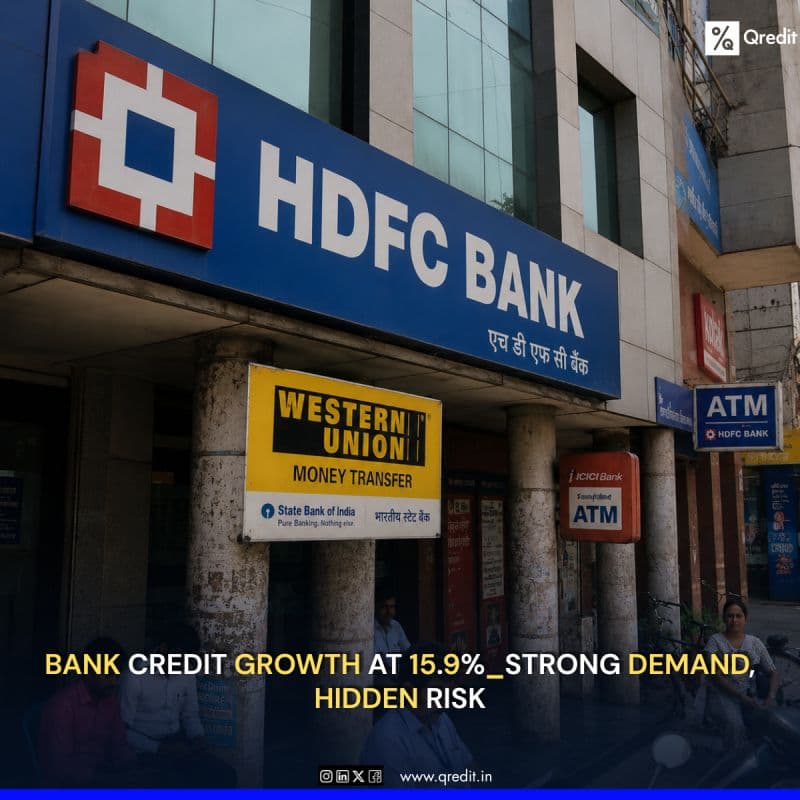
Bank credit growth hits 15.9% in FY26, but composition debate looms

Scheduled commercial banks expanded credit to ₹212.9 lakh crore, but economists are asking whether the growth reflects genuine productive expansion or early-stage overextension.

15.9% YoYFY26 scheduled commercial bank credit growth
“The next banking debate is not growth. It is credit composition.”
Image: Finsamudra LinkedIn archive
₹212.9 lakh croreOutstanding credit

Scheduled commercial banks grew credit by 15.9% year-on-year in FY26, reaching ₹212.9 lakh crore in outstanding advances. The growth rate itself signals robust lending appetite across the banking system, but the real question—favoured by analysts—centres on what kind of credit is driving the expansion.

The growth is broadly distributed. Services credit strengthened, personal loans accelerated, agriculture credit expanded, and industrial credit improved. This breadth across segments suggests the expansion is not concentrated in a single, potentially fragile sector.

However, rapid credit growth in any market warrants scrutiny. Lenders and regulators must distinguish between credit that finances productive assets—those generating sufficient cash flow to service and repay debt—and credit that simply pulls forward consumption or fuels asset-price inflation.

The banking industry's next chapter will not hinge on whether credit grows. It will depend on whether that credit builds into genuine economic cash flows or morphs into leverage that borrowers cannot service. This distinction shapes risk appetites, lending standards, and ultimately, asset quality across the system.

Why it matters

For DSAs, loan agents, and credit connectors, the composition of bank credit directly affects business models. If the 15.9% growth is anchored in productive credit (industry, agriculture, services), demand for distribution and origination remains healthy. Conversely, if growth tilts toward consumption-heavy personal loans without income-proportionate growth, delinquency rates may rise, tightening lender risk appetites and reducing volumes for smaller players.

Lenders and NBFCs must recalibrate pricing and underwriting now. Broad-based credit growth can mask pockets of overextension. Banks and lending partners that ignore credit composition in favour of growth targets risk asset-quality deterioration 12–18 months ahead, triggering stricter eligibility, higher rejection rates, and margin compression—dynamics that ripple through the entire distribution network.

Sources

Join the conversation on LinkedIn →
Finsamudra DeskNewsroom · 6 May 2026, 3:15 pm IST
See all

Get the Morning Brief

India's lending news before your first call — subscribe free

The same daily intelligence 30,000+ CXOs, DSAs and finance professionals follow on LinkedIn, with the Finsamudra take.

The Morning Brief · Free

Get India's lending news before your first call

The daily intelligence 30,000+ finance professionals follow on LinkedIn, in one short email from the Finsamudra Desk.