Finsamudra Newsroom, home

Finsamudra Desk

Kotak fraud case exposes procedural gaps, not tech flaws, in bank controls

A relationship manager allegedly issued false FD reports worth ₹150 crore to a municipal body with no cyber breach involved, surfacing questions about verification independence and internal process integrity.

₹150 croreAlleged false FD reports issued
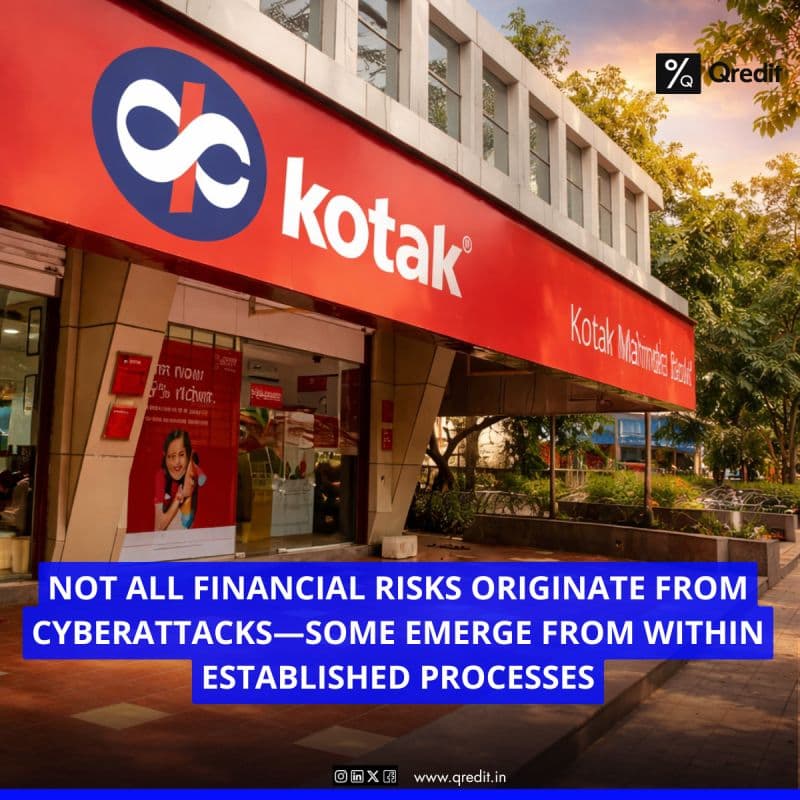
"The Kotak Mahindra Bank fraud case highlights an important reality: vulnerabilities in financial systems are not always technological—they can also be procedural."
Image: Finsamudra LinkedIn archive

A relationship manager at Kotak Mahindra Bank has been accused of issuing false fixed deposit reports valued at over ₹150 crore to a municipal body. The case marks a shift in how financial institutions should think about fraud risk: there was no indication of a cyber breach or external system compromise.

The alleged misrepresentation appears to have occurred within internal processes, suggesting the vulnerability lay not in technology but in how procedures were executed or enforced. This raises three critical questions for bank governance: Are verification mechanisms sufficiently independent? Is there over-reliance on relationship-driven assurances? Are internal checks proactive rather than reactive?

Financial systems typically anchor trust in documentation. When that documentation is called into question—as in this case—confidence can erode, particularly when institutional clients are involved. A municipal body's reliance on false FD reports creates both reputational and operational fallout.

The case illustrates a fundamental principle: risk does not always arise from system failure. Sometimes it emerges from gaps in process integrity. Governance frameworks are most effective when controls are not only well-designed but consistently enforced across all touchpoints.

For banks and lenders, the lesson is clear: relationship managers, despite their role in client retention, cannot be the sole verification point for high-value transactions. Independent cross-checks and segregation of duties remain non-negotiable.

Why it matters

For DSAs, connectors, and lending platforms, this case underscores why internal audit and verification protocols matter as much as technology. If a bank's relationship manager can allegedly issue false documentation unchecked, the same risk exists in any loan distribution network where personal relationships override procedural safeguards. Lenders must demand independent verification at every stage of loan origination and disbursement.

Borrowers and institutional clients should also recognize that trust in a financial institution depends on transparent, independently verifiable controls—not on the credibility of a single point of contact. For DSAs managing multiple relationships with banks and NBFCs, understanding and stress-testing these control frameworks is now a competitive differentiator.

More on Kotak

Every story on Kotak →

Sources

Join the conversation on LinkedIn →
Finsamudra DeskNewsroom · 26 Mar 2026, 12:37 pm IST
See all

Get the Morning Brief

India's lending news before your first call — subscribe free

The same daily intelligence 30,000+ CXOs, DSAs and finance professionals follow on LinkedIn, with the Finsamudra take.

The Morning Brief · Free

Get India's lending news before your first call

The daily intelligence 30,000+ finance professionals follow on LinkedIn, in one short email from the Finsamudra Desk.