Finsamudra Newsroom, home

Finsamudra Desk

Indian Bank targets ₹4,500–5,500 crore in NPA recovery for FY27

The bank recovered ₹1,885 crore in Q1 alone, putting it 34% ahead of its full-year target. Write-backs from resolved bad loans now directly boost the bottom line.

₹1,885 croreQ1 FY27 recovery achieved
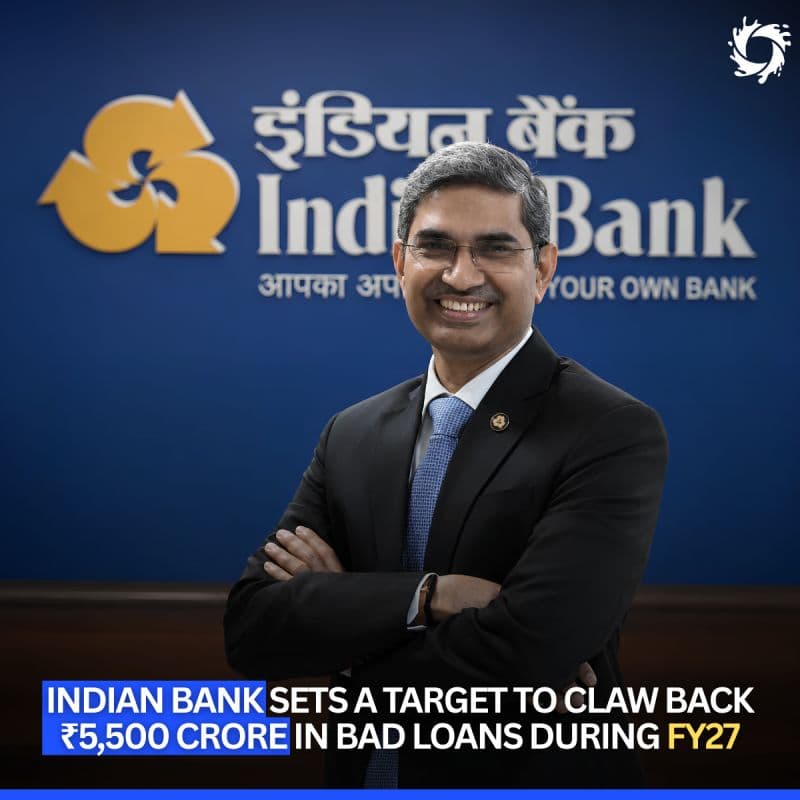
Indian Bank has set a target to claw back ₹4,500 crore to ₹5,500 crore from bad loans (NPAs) in FY27.
Image: Finsamudra LinkedIn archive
₹4,500–5,500 croreFY27 NPA recovery target
34%+Percentage of annual target met in 90 days

Indian Bank has set an ambitious recovery target of ₹4,500 crore to ₹5,500 crore from non-performing assets (NPAs) in FY27. Under MD & CEO Binod Kumar, the bank is executing a systematic approach to claw back capital from defaults that have accumulated on its books.

The scale of early progress is striking. In Q1 FY27 alone, the bank recovered ₹1,885 crore—representing over 34% of the maximum annual target in just 90 days. This pace suggests Indian Bank is on track to exceed its FY27 goal.

The bank is deploying multiple recovery levers: NCLT resolutions, one-time settlements with defaulters, and asset sales to recovery companies (ARCs). Each method extracts capital tied up in bad loans and channels it back to operations.

When a bank recovers a bad loan, the provisions previously set aside as a hedge against loss flow directly back into the profit and loss statement as write-backs. This mechanism transforms NPA recovery from a loss-absorption exercise into a revenue stream.

The shift marks a pivot in public sector banking. Rather than writing off bad debt and absorbing the cost, Indian Bank is treating recovery as an engineered revenue engine. Systematic NCLT prosecution and ARC sales have made this possible.

Why it matters

For DSAs, loan agents, and connectors distributing credit through Indian Bank's network, strong NPA recovery improves the lender's capital position and profitability. A healthier capital base typically translates to faster disbursals, better pricing flexibility, and a more competitive supply of credit in the market.

Indian Bank's recovery momentum also reinforces the importance of credit quality in the lending chain. Connectors and agents whose sourcing maintains low default rates gain lender preference—and better commission structures. As public sector banks engineer recoveries, the cost of poor underwriting upstream becomes more visible.

Sources

Join the conversation on LinkedIn →
Finsamudra DeskNewsroom · 13 Jul 2026, 11:30 am IST
See all

Get the Morning Brief

India's lending news before your first call — subscribe free

The same daily intelligence 30,000+ CXOs, DSAs and finance professionals follow on LinkedIn, with the Finsamudra take.

The Morning Brief · Free

Get India's lending news before your first call

The daily intelligence 30,000+ finance professionals follow on LinkedIn, in one short email from the Finsamudra Desk.