Finsamudra Newsroom, home

Finsamudra Desk

Kotak absorbs Deutsche Bank's ₹29,000 Cr retail portfolio as foreign banks exit India

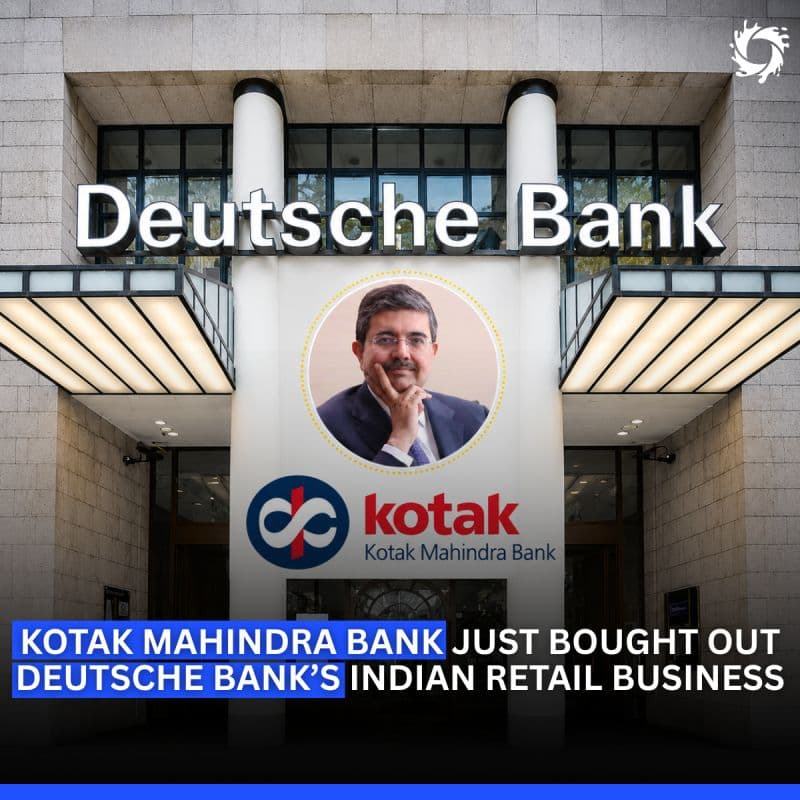
Kotak Mahindra Bank has acquired Deutsche Bank's entire retail, private banking, and wealth management business in India, signalling a broader retreat by foreign lenders from domestic consumer banking.

₹29,000 CrLoans acquired
If you are tracking the Indian financial sector, you are currently witnessing the end of an era. Kotak Mahindra Bank announced a massive definitive agreement to acquire Deutsche Ba
Image: Finsamudra LinkedIn archive
₹16,000 CrDeposits acquired
1.5 lakhAffluent customers acquired

Kotak Mahindra Bank announced a definitive agreement to acquire Deutsche Bank's retail, private banking, and wealth management portfolio in India. The deal brings ₹29,000 crore in loans, ₹16,000 crore in deposits, and 1.5 lakh highly affluent customers into Kotak's fold, immediately strengthening its consumer banking footprint.

This transaction reflects a macro shift: foreign banks are systematically exiting India's retail space. Deutsche Bank joins Citibank, which recently sold its retail portfolio to Axis Bank, in retreating from consumer lending. The pattern is clear and irreversible.

RBI compliance requirements and priority sector lending mandates create a cost burden foreign players cannot justify. Operating a retail branch network in India demands navigating complex regulatory frameworks—a fixed cost that doesn't yield adequate returns relative to global strategy for international lenders.

Domestic megabanks—HDFC, ICICI, SBI, and Kotak—have weaponized technology, UPI integration, and physical scale to acquire retail customers at unit costs foreign competitors cannot match. The competitive moat is structural, not temporary.

Foreign banks are not abandoning India; they are repositioning. Deutsche Bank, Citi, and peers are refocusing on corporate structuring, investment banking, and cross-border institutional finance—segments where they retain competitive advantage and customer stickiness.

The Indian retail banking sector has become a domestic fortress. Concentration risk has risen, but so has domestic innovation and customer acquisition velocity in the consumer lending space.

Why it matters

For loan distributors, DSAs, and connectors, this consolidation reshapes the lending ecosystem. Fewer foreign players competing for retail share means domestic megabanks will tighten terms, reduce commissions, and prioritize direct-to-consumer channels. Connectors dependent on foreign bank credit lines will face margin compression and longer approval cycles as these banks shrink their origination mandates.

The retreat also signals that India's credit distribution will be increasingly dominated by domestic banks and NBFCs with deep compliance expertise and scale. New entrants and mid-sized DSAs must differentiate through niche segments or technology-led underwriting rather than competing on volume in the mass affluent segment, where megabanks now have overwhelming structural advantage.

More on Kotak

Every story on Kotak →

Sources

Join the conversation on LinkedIn →
Finsamudra DeskNewsroom · 3 Jul 2026, 12:15 pm IST
See all

Get the Morning Brief

India's lending news before your first call — subscribe free

The same daily intelligence 30,000+ CXOs, DSAs and finance professionals follow on LinkedIn, with the Finsamudra take.

The Morning Brief · Free

Get India's lending news before your first call

The daily intelligence 30,000+ finance professionals follow on LinkedIn, in one short email from the Finsamudra Desk.