Finsamudra Newsroom, home

Finsamudra Desk

Bank of Baroda's ₹5,700 crore NMC settlement reopens PSU disclosure debate

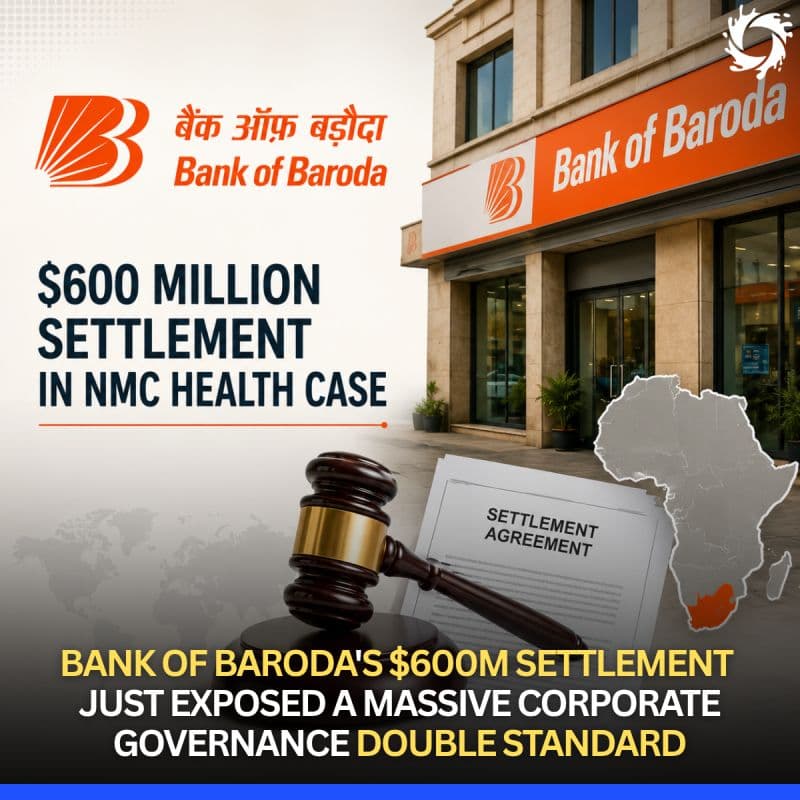
BoB's sudden $600 million payout to settle the NMC Healthcare fraud case in Dubai wipes out over a quarter of its projected annual net profit — after annual reports called its legal standing 'robust'.

Bank of Baroda's sudden decision to write a massive $600 million (₹5,700 crore) check to settle the NMC Healthcare fraud case in Dubai has just reopened a toxic debate in Indian fi
Image: Finsamudra LinkedIn archive
$600 million (₹5,700 crore)NMC Healthcare settlement
Wipes out more than a quarter of projected annual net profitImpact on profit

Bank of Baroda has agreed to pay $600 million (₹5,700 crore) to settle the NMC Healthcare fraud litigation in Dubai. The settlement arrives suddenly, with no major provisioning or clear risk warning flagged to shareholders beforehand.

In its official annual reports, the bank had repeatedly described its legal standing in the UAE litigation as "robust," offering little transparency on the scale of potential exposure. The overnight settlement wipes out more than a quarter of its projected annual net profit.

The episode has revived the debate over "ownership neutrality" — whether regulators hold state-owned banks to the same disclosure and compliance standards as private ones.

The post argues that if a private lender like HDFC Bank or ICICI Bank had concealed a $600 million legal risk of this size, SEBI would likely have issued show-cause notices for disclosure violations, the RBI would have questioned management aggressively, and institutional investors would have reacted sharply. In BoB's case, the regulatory response has been notably quiet.

Why it matters

For lenders and DSAs distributing products linked to public sector banks, this is a reminder that PSU balance sheets can carry contingent liabilities that aren't fully priced into public disclosures until they crystallize suddenly — as this ₹5,700 crore hit shows.

For connectors and finance professionals advising retail investors or corporate clients on PSU bank exposure, the case underlines that ownership structure can materially affect how much risk information reaches the market before it becomes a balance-sheet event.

Sources

Join the conversation on LinkedIn →
Finsamudra DeskNewsroom · 6 Jul 2026, 12:30 pm IST
See all

Get the Morning Brief

India's lending news before your first call — subscribe free

The same daily intelligence 30,000+ CXOs, DSAs and finance professionals follow on LinkedIn, with the Finsamudra take.

The Morning Brief · Free

Get India's lending news before your first call

The daily intelligence 30,000+ finance professionals follow on LinkedIn, in one short email from the Finsamudra Desk.