Finsamudra Newsroom, home

Finsamudra Desk

Aditya Birla Capital raises ₹4,000 Cr in preferential issue led by Grasim and IFC

ABCL's ₹3,080 Cr promoter injection and ₹920 Cr IFC backing signals institutional confidence in NBFC-led MSME lending consolidation.

₹4,000 CrTotal preferential fundraise
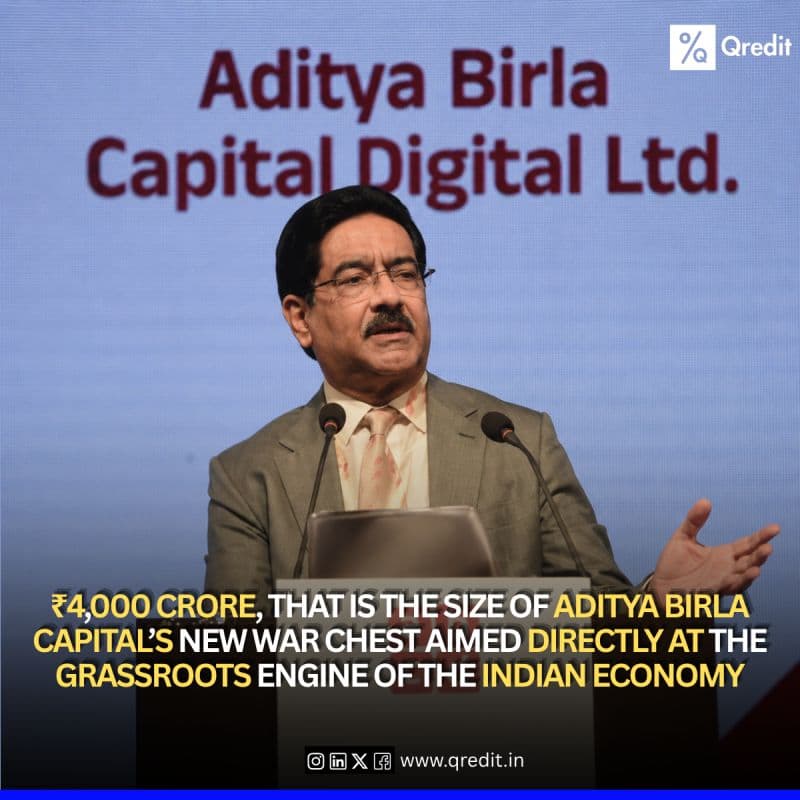
❛Aditya Birla Capital (ABCL) just announced a massive preferential fundraise. But if you look past the headline numbers, this deal signals a defining trend in India's lending lands
Image: Finsamudra LinkedIn archive
₹3,080 CrPromoter entities (Grasim-led)
₹920 CrInternational Finance Corporation backing

Aditya Birla Capital announced a preferential fundraise of ₹4,000 Cr, split between promoter entities led by Grasim (₹3,080 Cr) and the International Finance Corporation (₹920 Cr). The capital injection reflects both domestic and global confidence in the company's credit distribution model.

The equity issuance is priced at ₹356.02 per share, trading at a premium to prevailing market rates. This valuation gap underscores institutional conviction in ABCL's near-term growth outlook and its ability to scale operations.

The fundraise arrives at a moment when large, corporately-backed NBFCs are consolidating their grip on India's MSME lending ecosystem. These firms, built for efficient credit access to under-financed borrowers, are becoming the preferred vehicles for both domestic and global capital seeking exposure to India's credit distribution sector.

IFC's participation signals international appetite for India's non-bank lending infrastructure, particularly platforms targeting SME credit gaps. Global development finance institutions see scalable MSME lending as a high-impact investment thesis in emerging markets.

The capital mix—promoter stability paired with strategic global backing—reflects a broader trend: institutions that can efficiently aggregate and distribute credit at scale are attracting multi-stage, multi-geography investor participation.

Why it matters

For DSAs and loan distribution networks, this signals institutional conviction around the NBFC-led lending model. Large corporates with global backing can absorb volatility, scale technology faster, and access cheaper capital—all advantages that flow down to connectors in the form of more stable product offerings and competitive margins.

For lenders and borrowers in the MSME space, consolidation of capital among efficient NBFCs can mean tighter underwriting, faster turnarounds, and deeper data-driven risk assessment. However, it also means smaller players face pressure to specialize or exit, reshaping the competitive landscape for credit distribution networks.

Sources

Join the conversation on LinkedIn →
Finsamudra DeskNewsroom · 21 May 2026, 12:30 pm IST
See all

Get the Morning Brief

India's lending news before your first call — subscribe free

The same daily intelligence 30,000+ CXOs, DSAs and finance professionals follow on LinkedIn, with the Finsamudra take.

The Morning Brief · Free

Get India's lending news before your first call

The daily intelligence 30,000+ finance professionals follow on LinkedIn, in one short email from the Finsamudra Desk.